
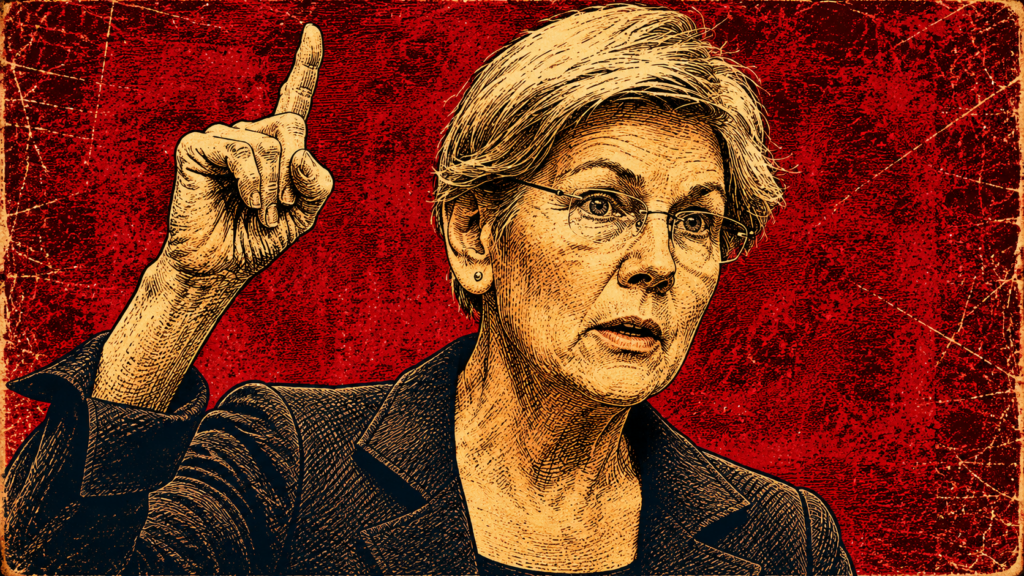
DOJ Warns Senator Elizabeth Warren Over Investigation Records
The U.S. Department of Justice has warned Senator Elizabeth Warren that she could face significant legal consequences if she fails to preserve records connected to potential congressional investigations involving President Donald Trump and his associates. The warning was delivered in a letter from Aaron Reitz, the U.S. attorney in Houston, Texas, on November 15, 2026. The letter addressed Warren’s anticipated role as chair of the Senate Banking Committee when Democrats take control of Congress in January 2027. The development has intensified tensions between the Justice Department and congressional Democrats, who have signaled plans to investigate the Trump administration and individuals connected to the president.
In the letter, Reitz accused Warren of appearing prepared to use her future committee leadership position to pursue investigations targeting people associated with Trump. He wrote that she seemed “eager to wield your future gavel like a tomahawk, hunting for the scalps of President Trump’s private associates.” Reitz instructed the senator to preserve materials relevant to what he characterized as her intention to weaponize congressional investigations and deprive individuals of their constitutional rights. The language of the letter drew attention because it went beyond a routine records-preservation reminder and directly criticized Warren’s anticipated oversight activities.
The warning specifically concerns the preservation of documents and other materials that could become relevant to potential investigations. Such notices generally instruct recipients not to destroy, alter or discard records that may be connected to a legal matter. They can precede formal investigations, although receiving a preservation notice does not automatically mean that a person is the subject of a criminal investigation or has committed a violation. In Warren’s case, the letter signals that federal prosecutors are monitoring statements and activities related to the investigations Democrats have said they intend to pursue.
Warren is the senior Democrat on the Senate Banking Committee and is widely expected to become its chair after the change in congressional leadership. The committee has jurisdiction over important areas of the U.S. financial system, including banking regulation, financial institutions, housing finance and certain consumer protection matters. Its oversight authority allows lawmakers to examine the conduct of corporations, financial institutions and federal agencies within the committee’s jurisdiction. Warren has been a prominent critic of Wall Street and has repeatedly called for stronger oversight of major corporations and financial interests.
Democrats have indicated that their anticipated congressional investigations could cover major corporations, White House Chief of Staff Stephen Miller and billionaire businessman Elon Musk, among other subjects. Warren and other lawmakers have also raised questions about the financial and political activities of individuals connected to the administration. Their plans are part of a broader effort to use congressional oversight authority when the party assumes control of Congress in January. The proposed inquiries have not all become formal investigations, and the specific scope of future committee proceedings will depend on decisions made by congressional leadership.

President Trump has also taken steps that have contributed to the growing dispute. Reuters reported that Trump recently directed the Justice Department to examine Democratic lawmakers over statements he characterized as threatening. Attorney General Todd Blanche subsequently indicated that the department was prepared to confront congressional Democrats over their proposed actions. These developments have placed the department at the center of a dispute involving the boundaries between congressional oversight, executive authority and potential criminal enforcement.
Reitz’s letter to Warren was not an isolated communication. Other Democratic lawmakers have received similar warnings concerning their anticipated oversight activities. They include Senator Richard Blumenthal of Connecticut, Senator Elissa Slotkin of Michigan and Representative Robert Garcia of California. Garcia is expected to take a leading role on the House Oversight Committee when Democrats assume control of the chamber. The letters have raised questions about whether the administration is attempting to discourage congressional investigations before lawmakers formally begin exercising their oversight responsibilities.
Reitz shared the letter to Warren on social media, and Trump later reposted it on his Truth Social account. The public circulation of the correspondence brought additional attention to the dispute. Rather than remaining a private communication between a federal prosecutor and a senator, the warning became part of a wider political exchange involving the president, the Justice Department and Democratic lawmakers preparing to assume committee leadership positions. The public statements surrounding the letter have also made the disagreement over congressional investigations more visible.
Warren’s office did not immediately respond to Reuters’ request for comment at the time of publication. Her lack of an immediate public response does not establish whether she agrees or disagrees with the letter’s allegations. The senator has previously spoken publicly about plans to investigate corporations and individuals connected to the administration. Her stated position has focused on examining financial conduct and matters she believes warrant congressional scrutiny. The Justice Department’s letter, meanwhile, raises questions about whether some proposed investigations could improperly target private individuals or infringe on constitutional rights.
The dispute highlights the tension between Congress’s oversight responsibilities and the executive branch’s authority to enforce federal law. Congressional committees routinely request documents, conduct hearings and investigate matters involving government agencies and private entities. These activities are generally expected to serve legitimate legislative purposes. At the same time, the Constitution and federal law establish protections for individuals who may be affected by government investigations. Determining whether a particular congressional inquiry falls within legitimate oversight authority or crosses a legal boundary can involve complex questions that may ultimately require judicial consideration.
The records-preservation warning also carries practical implications for Warren and the congressional offices involved. Preserving relevant communications, correspondence and other documents can become important if an inquiry later leads to litigation or formal legal proceedings. Failure to retain records after receiving an appropriate preservation notice can create additional legal exposure, depending on the circumstances and applicable law. However, the letter itself does not establish that Warren has destroyed records, violated a preservation requirement or committed a crime. Its immediate purpose is to put her on notice about retaining potentially relevant materials.
The Justice Department’s warning comes as both parties prepare for a major shift in congressional oversight beginning in January 2027. Warren’s anticipated leadership of the Senate Banking Committee and the expected Democratic leadership of other committees could bring investigations involving financial institutions, government officials and people connected to the president. Whether those inquiries proceed, what records they seek and how the administration responds will shape the next phase of the dispute. For now, the letter represents a formal warning from a federal prosecutor amid an escalating disagreement over the scope of congressional investigations and the legal limits of government oversight.

Key Legal and Political Outcomes
- U.S. Attorney Aaron Reitz sent Senator Elizabeth Warren a letter warning of potential legal consequences if she failed to preserve records related to anticipated congressional investigations.
- The letter instructed Warren to retain materials connected to her plans for congressional oversight of Trump and his associates.
- Similar records-preservation warnings have been sent to Senators Richard Blumenthal and Elissa Slotkin and Representative Robert Garcia.
- The warning does not constitute a criminal charge or establish that Warren is the subject of a criminal investigation.
- The dispute raises questions about the boundaries between congressional oversight authority, executive power and federal law enforcement.
Why It Matters
- Warren is expected to lead the Senate Banking Committee when Democrats assume control of Congress in January 2027.
- Congressional investigations could examine major corporations, financial institutions and individuals connected to the Trump administration.
- Records-preservation notices can have legal consequences because recipients may be required to retain relevant documents and communications.
- The dispute highlights potential conflicts between Congress’s investigative authority and the executive branch’s enforcement powers.
- The Justice Department’s response could influence how future congressional oversight efforts are conducted and challenged.
