
Trump Seeks New Limits on Federal Judges
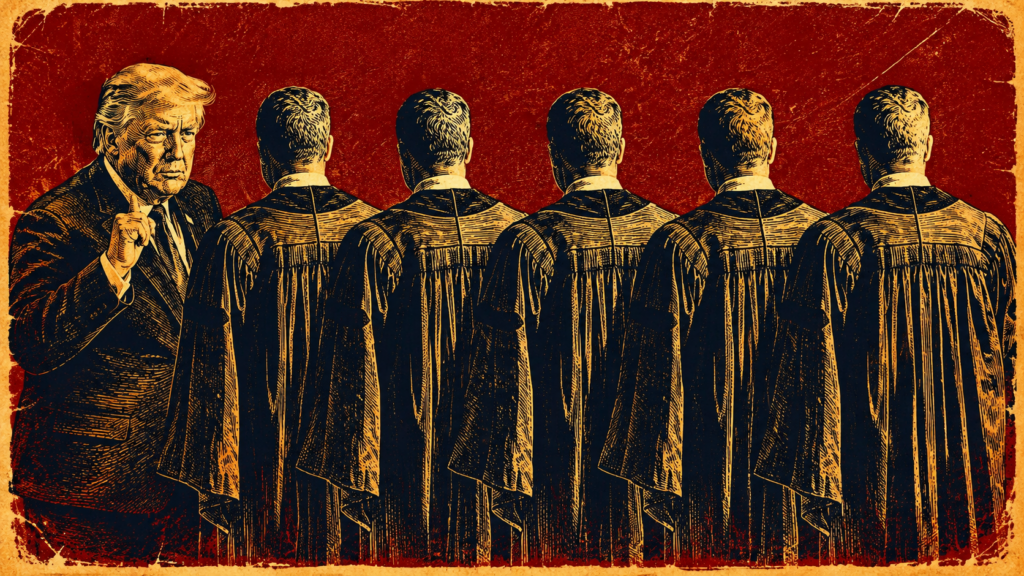
President Donald Trump’s administration is asking the U.S. Supreme Court to further restrict the authority of federal judges to block government policies, opening another major legal dispute over the balance of power between the executive and judicial branches. In an appeal filed by the Department of Justice, the administration argues that courts should not be able to invalidate federal agency regulations nationwide under the Administrative Procedure Act (APA). Instead, judges should generally limit relief to the specific individuals or organizations that brought the lawsuit. The case could have significant consequences for how federal policies are challenged and how quickly unlawful government regulations can be stopped.
The appeal follows a Supreme Court decision in June 2025 that limited the use of nationwide, or universal, injunctions. Those orders allow federal judges to prevent the government from enforcing a policy against people or organizations who are not directly involved in the lawsuit. The 2025 ruling restricted that particular judicial remedy but did not eliminate a separate authority courts have traditionally exercised under the Administrative Procedure Act. The Trump administration is now seeking to narrow that additional power, potentially reducing the ability of judges to suspend federal regulations beyond the parties involved in a case.
The Administrative Procedure Act, enacted in 1946, establishes procedures governing federal agencies and provides a legal framework for challenging their actions. Under the law, courts may review agency decisions and determine whether regulations violate federal statutes or other legal requirements. Judges have historically interpreted the authority to “hold unlawful and set aside” agency rules as allowing them to invalidate regulations more broadly than the individual plaintiffs who filed the lawsuit. The administration argues that this interpretation gives courts greater authority than Congress intended and that judicial relief should be more narrowly tailored.
The dispute reaching the Supreme Court originated from a lawsuit filed by Texas medical providers challenging federal regulations designed to limit unexpected out-of-network medical bills. These rules were adopted under legislation signed by Trump during his first presidential term. The plaintiffs, including a Texas association of medical doctors and air-ambulance providers, argued that portions of the regulations violated the Administrative Procedure Act and artificially reduced reimbursement rates from health insurers. Their challenge focused on how the federal government implemented the rules and the financial consequences for health care providers.
In August 2026, the New Orleans-based 5th U.S. Circuit Court of Appeals invalidated portions of the challenged regulations nationwide after finding violations of the Administrative Procedure Act. The ruling allowed the legal challenge to affect the regulation beyond the individual plaintiffs who brought the case. The Trump administration appealed, but its argument before the Supreme Court is not primarily about whether the disputed medical billing regulations were lawful. Instead, the administration is challenging the scope of the remedy available to federal courts when they determine that an agency regulation violates the law.
The Justice Department maintains that the Administrative Procedure Act does not authorize courts to invalidate regulations for everyone nationwide simply because a limited group of plaintiffs successfully challenges them. According to the administration, judges should generally restrict their orders to the specific parties involved in a case. The government argues that this approach would return lower courts to their proper role under the statute and prevent judges from exercising authority beyond what Congress granted. If accepted, the argument could substantially change how courts handle lawsuits challenging federal agency regulations.

Legal experts say the potential consequences extend well beyond the medical billing dispute. Aditya Bamzai, a University of Virginia law professor specializing in administrative law, explained that a ruling in favor of the administration could allow the government to continue enforcing regulations against people and organizations that were not parties to the original lawsuit. This could remain the situation for an extended period while other affected individuals or groups pursue their own legal challenges. As a result, separate lawsuits might be necessary before a regulation found unlawful can be removed more broadly.
Supporters of nationwide judicial relief argue that limiting court orders to individual plaintiffs could create inconsistent regulatory systems. For example, a federal rule governing food safety or automobile manufacturing generally needs to operate under uniform standards. If a court determines that a regulation is unlawful but can only block its enforcement against the parties who sued, the same rule could remain enforceable against other businesses and individuals. Law professor Ronald Levin of Washington University in St. Louis argued that there are circumstances in which invalidating an unlawful regulation more broadly is the only practical solution. He also emphasized that judges should not necessarily use this authority in every case.
The legal disagreement has also attracted support from some Republican-led states, complicating the administration’s position. Texas, Florida and other states had urged the 5th Circuit not to weaken the effectiveness of the Administrative Procedure Act. They argued that the statute provides an important safeguard against federal government overreach and helps protect state sovereignty. Their position highlights that the issue is not exclusively a partisan disagreement. States may rely on the ability to challenge federal regulations when they believe the government has exceeded its statutory authority, regardless of which political party controls the White House.
The Supreme Court’s earlier decision restricting universal injunctions arose from litigation involving Trump’s effort to limit birthright citizenship. That 2025 ruling addressed the authority of federal judges to issue nationwide injunctions, rather than determining whether the birthright citizenship policy itself was constitutional. In a separate decision in June 2025, the Supreme Court rejected Trump’s birthright citizenship policy as unconstitutional by a 6-3 vote. The distinction is important because the current appeal concerns a different legal mechanism under the Administrative Procedure Act, even though both disputes involve the scope of judicial authority over presidential policies.
The Supreme Court is expected to consider whether to take up the administration’s appeal early in 2027. If the justices agree to hear the case and ultimately adopt the Justice Department’s position, the decision could narrow the ability of federal courts to invalidate agency regulations nationwide. Individuals, businesses, advocacy organizations and state governments challenging federal rules might need to pursue separate legal actions to obtain relief. If the court declines to adopt the administration’s argument, the existing judicial authority under the Administrative Procedure Act would remain more broadly available. No final Supreme Court decision has been issued in this dispute.
The case represents another significant legal test involving the limits of federal judicial power and the authority of the executive branch. The administration argues that judges should not have the ability to impose broad restrictions on federal agency regulations when only specific parties have challenged them. Opponents of that position maintain that nationwide relief can be essential to prevent unlawful rules from continuing to affect the public. The Supreme Court’s eventual decision could influence how future administrations implement federal policies, how courts review agency actions and how effectively individuals and organizations can challenge government regulations.

Key Legal Outcome
- The Trump administration is asking the Supreme Court to limit federal judges’ authority to invalidate agency regulations nationwide under the Administrative Procedure Act.
- The appeal follows a 5th Circuit ruling that invalidated portions of federal surprise medical billing regulations nationwide.
- The Justice Department argues that judicial relief should generally apply only to the specific plaintiffs involved in a lawsuit.
- The case is separate from the Supreme Court’s 2025 decision restricting nationwide injunctions, although both disputes concern the scope of judicial authority.
- The Supreme Court has not yet issued a ruling on the appeal and is expected to consider whether to hear it in early 2027.
Why It Matters
- A ruling for the administration could make it more difficult for individuals and organizations to obtain nationwide relief from regulations found unlawful.
- Federal agencies could potentially continue enforcing disputed rules against people who were not parties to the original lawsuit.
- Businesses and individuals may face additional litigation to challenge regulations affecting them.
- The dispute raises important questions about the balance of power between federal courts, Congress and the executive branch.
- The outcome could shape how future administrations implement policies and how Americans challenge federal government regulations.
