
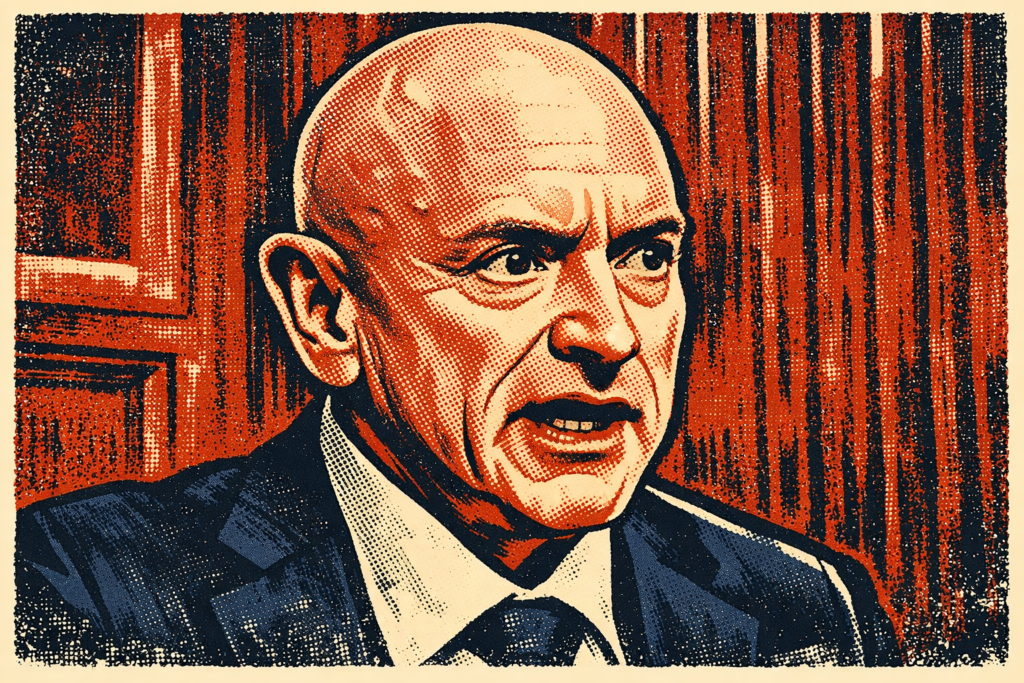
DOJ Unable to Charge Kelly and 5 Other Democrats
The Department of Justice (DOJ) under the administration of President Donald Trump recently attempted to secure indictments against several Democratic lawmakers over a politically charged video but failed to convince a federal grand jury to bring charges, according to multiple news reports.
The matter stems from a controversial video released last year in which six Democratic members of Congress urged U.S. military and intelligence personnel to refuse what they described as unlawful orders. The Trump DOJ, led by U.S. Attorney Jeanine Pirro — a Trump appointee and former television personality — pursued a legal investigation into whether the lawmakers’ actions could constitute criminal conduct.
On February 10, 2026, prosecutors presented the case to a federal grand jury, seeking indictments connected to the video’s content. The lawmakers featured included Sen. Elissa Slotkin (D-Mich.), Sen. Mark Kelly (D-Ariz.), Rep. Jason Crow (D-Colo.), Rep. Maggie Goodlander (D-N.H.), Rep. Chris Deluzio (D-Pa.) and Rep. Chrissy Houlahan (D-Pa.).
The video had sparked political controversy, with President Trump and his allies asserting that encouraging service members to disobey orders could amount to dangerous conduct, potentially undermining military discipline or inciting unlawful behavior. The DOJ’s effort to pursue legal action was widely seen as part of broader tensions between the Trump White House and its Democratic critics.
However, the grand jury did not return an indictment, effectively rejecting the government’s case. The grand jury’s decision is noteworthy because grand jury indictments are traditionally easy for prosecutors to obtain; the legal threshold requires only probable cause for charges, not the higher burden of proof needed at trial.

The failure to secure indictments represents a significant setback for the DOJ under Trump, particularly because the department has aggressively pursued various legal actions against the president’s political opponents in recent years. Observers told NBC News that it was unclear whether the DOJ would make another attempt to present the case to a different jury or pursue other legal avenues, but the rejection undercuts the administration’s claims of wrongdoing by the lawmakers.
Democratic lawmakers reacted strongly to the federal grand jury’s decision. They publicly criticized the Trump DOJ’s strategy, framing the effort as political intimidation rather than a legitimate criminal inquiry. Some lawmakers highlighted the constitutional protections for political speech, especially speech by elected officials, and questioned whether urging resistance to unlawful orders — as part of broader legal and civic debate — can ever rise to the level of criminal conduct.
Critics of the administration’s approach argue that the failed indictment effort reflects a broader pattern of politicization within the DOJ. Under President Trump, the department has been accused by opponents of selectively targeting political adversaries while shielding allies. Past episodes have drawn scrutiny, including earlier failed attempts to indict other high-profile figures.
Legal experts note that a grand jury’s refusal to indict is rare, and that such rejections are typically regarded as affirmations of prosecutorial overreach or insufficient evidence presented by prosecutors. Some analysts have suggested the grand jury’s decision may reflect skepticism about the legal merits of the case, particularly given long-standing First Amendment protections for political speech and advocacy.
The outcome is likely to fuel ongoing debates over the independence of the DOJ, the limits of federal prosecutorial power in politically sensitive cases, and how the U.S. legal system should balance enforcement of criminal law against robust political discourse. As the Trump administration enters a period of heightened political contests leading up to future elections, the episode is adding to discussions about how legal institutions are being used or tested in highly partisan contexts.

⚖️ Key Legal Outcomes
-
A federal grand jury refused to indict several Democratic lawmakers over a controversial video urging refusal of unlawful orders.
-
The attempt was led by the DOJ under President Donald Trump, through the U.S. Attorney’s Office in Washington.
-
The six lawmakers involved include Sen. Slotkin, Sen. Kelly, Rep. Crow, Rep. Goodlander, Rep. Deluzio, and Rep. Houlahan.
-
Prosecutors failed to meet the probable cause threshold required for grand jury indictment.
-
The decision is seen as a significant rebuke of the DOJ’s prosecution strategy in politically sensitive cases.
❗ Why It Matters
-
A grand jury’s rejection is unusual and rare, especially for politically charged DOJ cases.
-
The outcome raises questions about the merits and legal basis of the prosecution strategy.
-
It underscores concerns about politicization of federal law enforcement under the Trump administration.
-
The decision supports longstanding First Amendment protections for political speech by elected officials.
-
It may influence how future politically sensitive cases are pursued by the DOJ.
