
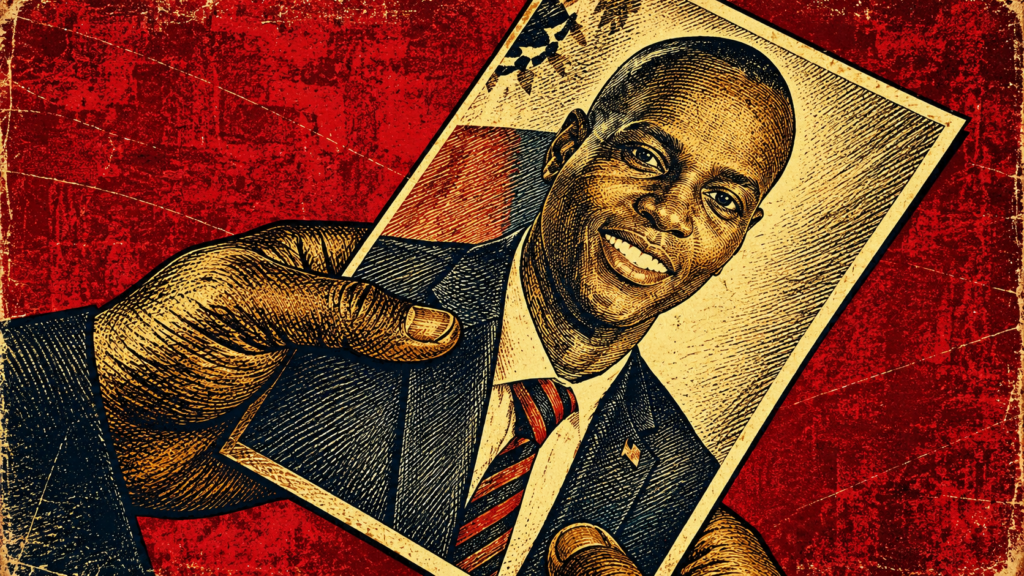
Florida Pastor Convicted in Assassination of Haitian President Jovenel Moïse
A Florida pastor with dual Haitian-American citizenship has been found guilty of all federal charges connected to the 2021 assassination of Haitian President Jovenel Moïse. Christian Emmanuel Sanon was convicted following a nearly eight-week trial in federal court in Miami, Florida. The verdict represents another significant development in the ongoing investigation into the assassination, which shocked Haiti and intensified the country’s already severe political and security crisis. Sanon faced eight criminal charges, including conspiracy to kidnap or kill a person outside the United States. He now faces the possibility of spending the rest of his life in prison.
The jury’s decision came after prosecutors presented evidence alleging that Sanon participated in a broader conspiracy to remove Moïse from power and install a new president selected by the conspirators. According to the prosecution, South Florida served as an important center for organizing and financing the operation. Investigators alleged that Sanon was initially identified as the preferred candidate to replace Moïse and played a role in raising money, arranging transportation, and coordinating accommodations for individuals involved in the plan. The prosecution argued that these activities connected him directly to the conspiracy that ultimately resulted in the Haitian president’s assassination.
Sanon was born in Haiti and moved to the United States during his teenage years. He later became involved in church-related activities within Haitian immigrant communities in Florida and the Midwest. During his trial, Sanon acknowledged having communications with individuals who wanted to replace Moïse as president. However, he denied knowing about or participating in any plan to assassinate the Haitian leader. He maintained that the conspirators had already abandoned his potential candidacy and selected another person long before the assassination occurred. Despite his defense, the jury found him guilty of all charges brought against him.
The assassination that led to the case occurred on July 7, 2021, when a group of armed men, consisting largely of former Colombian military personnel, stormed Moïse’s private residence during the night. The president was fatally shot, while his wife, Martine Moïse, was also wounded during the attack. The killing created an immediate political vacuum and left Haiti struggling with questions surrounding leadership, constitutional authority, and national stability. Since the assassination, the country has experienced prolonged political uncertainty, widespread violence, and the growing influence of armed gangs. The absence of stable national leadership has further complicated efforts to restore democratic institutions and public security.
Prosecutors presented evidence suggesting that the assassination plot involved approximately two dozen foreign mercenaries who were recruited and financially supported through a network of individuals and companies operating in the United States and Haiti. Investigators also alleged that some of the money used to finance the operation originated from U.S. government assistance programs established to support businesses during the COVID-19 pandemic. The alleged misuse of these funds raised additional concerns about financial accountability and the possibility that government assistance intended for economic recovery had been diverted to support an international criminal conspiracy.

The conspiracy reportedly began taking a more organized form in April 2021, when Sanon met in South Florida with a former Haitian senator and several American businesspeople. According to the indictment, the group discussed plans for Sanon to assume Haiti’s presidency and provide government contracts to two Florida-based companies associated with a security operation known as CTU. The proposed contracts reportedly involved infrastructure development, security forces, and military equipment. Prosecutors argued that these arrangements demonstrated that the conspiracy was not simply an effort to remove an existing president but also an attempt to establish a new political administration that would benefit the people financing and organizing the operation.
The companies involved in the alleged arrangement initially recruited approximately 18 Colombian nationals with military training. Prosecutors said these individuals were originally hired to provide security for Sanon, but their involvement later became connected to the broader operation against Moïse. Investigators also presented information about efforts to obtain firearms, body armor, and other equipment needed for the mission. In addition, members of the conspiracy allegedly attempted to establish relationships with Haitian criminal gangs to strengthen their influence and operational capabilities. These developments illustrated the scale of the alleged preparations and the involvement of individuals from multiple countries.
By June 2021, however, the conspirators reportedly recognized that Sanon lacked the constitutional qualifications and sufficient public support to become Haiti’s president. As a result, they shifted their support to Wendelle Coq Thélot, a former Haitian Supreme Court judge. Thélot later died in January 2025 while she was a fugitive. This change in political preference became an important part of the prosecution’s account of the conspiracy because it demonstrated how the group’s plans evolved before the assassination. Although Sanon was no longer the preferred candidate, prosecutors maintained that his earlier participation in the operation still connected him to the criminal scheme.
Sanon’s trial was initially expected to take place alongside proceedings against four other defendants accused of participating in the assassination conspiracy. However, his case was eventually separated and delayed because of health-related issues. The four other defendants, Arcangel Pretel Ortiz, Antonio Intriago, Walter Veintemilla, and James Solages, were convicted in an earlier federal trial. Their convictions involved conspiracy to kill or kidnap Haiti’s elected leader, providing material support for the operation, and violations of the U.S. Neutrality Act. They also face the possibility of life imprisonment. Their cases demonstrate that the investigation has extended beyond the individuals who physically carried out the attack to those accused of organizing, financing, and supporting the operation.
The investigation has continued to expand, with U.S. authorities charging more than 40 individuals in connection with the assassination. Approximately a dozen people have been convicted, including five who are already serving life sentences. In a separate development, 18 suspects were extradited from Haiti to the United States in September 2026 to face charges related to the case. Among those implicated are 17 former Colombian soldiers and Joseph Felix Badio, a former Haitian Ministry of Justice employee who was previously associated with an anti-corruption unit. These developments indicate that investigators are continuing to pursue individuals believed to have played different roles in the conspiracy, even several years after the assassination.
Following the verdict, Sanon’s legal team expressed disagreement with the jury’s decision and announced plans to appeal. His sentencing is scheduled for February 10, 2027, and he could receive a life sentence depending on the court’s determination. The conviction also comes as Haiti prepares for a presidential election scheduled for 2027, an important opportunity for the country to restore an elected national leadership structure. However, the continuing influence of armed gangs, political instability, and unresolved questions surrounding the assassination remain significant obstacles. The outcome of Sanon’s case may provide another step toward accountability, but it does not resolve the broader political and security problems facing Haiti.
Ultimately, the conviction of Christian Emmanuel Sanon highlights the international dimensions of the assassination of Jovenel Moïse and the legal consequences faced by individuals accused of participating in efforts to overthrow a foreign government through violence. The case demonstrates how alleged criminal operations can involve political figures, private businesses, foreign military personnel, and financial networks operating across national borders. It also reinforces the ability of U.S. federal authorities to prosecute individuals for certain serious offenses involving alleged conspiracies outside American territory when the conduct falls within U.S. jurisdiction. While the conviction represents a major development in the pursuit of justice for Moïse, the continuing investigation and Haiti’s upcoming political transition will remain important developments to watch.

KEY LEGAL OUTCOME
- Christian Emmanuel Sanon was found guilty of all eight federal charges connected to the conspiracy surrounding the 2021 assassination of Haitian President Jovenel Moïse.
- The most serious charge involved conspiracy to kidnap or kill a person outside the United States, exposing Sanon to a potential life sentence.
- Prosecutors established allegations involving financial support, recruitment activities, transportation arrangements, and preparations connected to the assassination plot.
- Sanon’s sentencing is scheduled for February 10, 2027, while his defense team has announced plans to appeal the jury’s verdict.
- The conviction adds to the growing number of individuals prosecuted in the United States, with more than 40 people charged in connection with the assassination investigation.
WHY IT MATTERS
- Accountability for political violence: The conviction demonstrates that individuals accused of participating in conspiracies to assassinate foreign political leaders can face serious criminal consequences.
- International legal enforcement: The case highlights the ability of U.S. authorities to investigate and prosecute certain international criminal conspiracies involving American-based individuals, businesses, and financial activities.
- Protection of democratic institutions: The assassination of Haiti’s president exposed the serious consequences of efforts to overthrow elected leadership through organized violence.
- Financial oversight: Allegations involving the misuse of COVID-19 assistance funds raise concerns about government financial accountability and the prevention of fraudulent activities.
- Haiti’s political future: The ongoing investigation and upcoming presidential election are important to restoring political stability, public confidence, and democratic governance in Haiti.
