
Former AG Says He Didn’t See Trump In Epstein Files
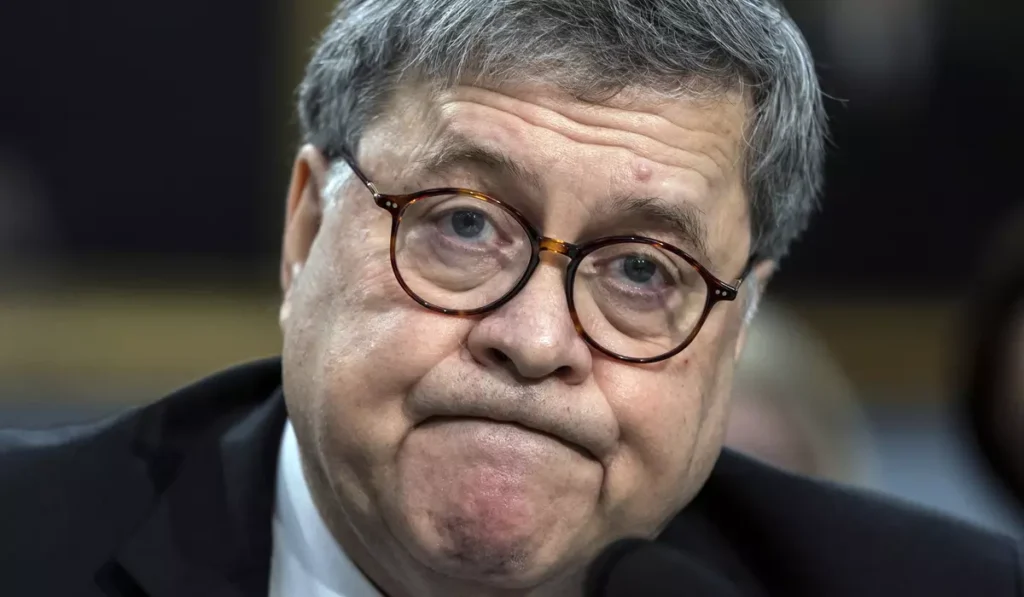
Former Attorney General William Barr recently testified behind closed doors before the House Oversight Committee, declaring that during his tenure he did not observe anything in the Jeffrey Epstein files that implicated President Donald Trump. He specifically noted that he had no conversations with Trump about an Epstein “client list,” nor did he see evidence connecting Trump to Epstein’s wrongdoing.
Barr’s testimony comes amid mounting pressure for transparency in the Epstein case. The Department of Justice has agreed to begin transferring relevant files to Congress, though the documents will be carefully redacted to protect victim identities and sensitive content. Some critics argue that the DOJ’s redaction process risks obscuring critical details.

Oversight Committee Chair Rep. James Comer emphasized the importance of full accountability, pressing the DOJ for timely delivery of the requested materials. Barr’s deposition was the first in a series of subpoenas issued to high-profile figures including past attorneys general, FBI directors, and the Clintons, aiming to clarify Epstein’s network and the government’s response.
Barr also confirmed there was no so-called “client list” linking powerful individuals to Epstein’s crimes, reinforcing earlier DOJ statements dismissing its existence. He supported the official conclusion that Epstein died by suicide, though oversight investigations—prompted by lapses in jail security and incomplete camera footage—have raised lingering questions about the circumstances surrounding his death.
The investigation—particularly Barr’s deposition—has deep political implications. Not only does it influence public trust in justice institutions, but it also reflects broader partisan tensions. Democrats and Republicans alike are seeking to ensure the truth is not obscured, with some accusing each other of either suppressing information or politicizing the probe.

5–6 Legal Key Outcomes
-
No Evidence Implicating Trump: Barr explicitly stated he found no information in Epstein-related DOJ files that would implicate President Trump. Wall Street JournalThe Washington Post.
-
No “Client List” Confirmed: Barr affirmed under oath that he had no knowledge of a client list naming powerful associates in Epstein’s network. Wall Street JournalNew York Post.
-
DOJ Compliance with Subpoenas: The Department of Justice agreed to begin providing Epstein documents to Congress in redacted form in response to subpoenas. The Washington PostPolitico.
-
Preservation of Victim Privacy: The process will prioritize protecting victims’ identities and sensitive content, limiting what is shared publicly. Wall Street JournalThe Washington Post.
-
Epstein’s Death Deemed Suicide (Contested): Barr supported the DOJ’s conclusion that Epstein died by suicide but acknowledged systemic failures at the jail that intensify scrutiny and suspicion. New York Post.
-
Broader Investigation Underway: Barr’s testimony sets the stage for more depositions from high-profile figures, suggesting a deepening congressional inquiry that may expose new information or contradictions. PoliticoThe Washington Post.
Outlet: Yahoo News (via coverage)
Publication Date: August 18–19, 2025

