
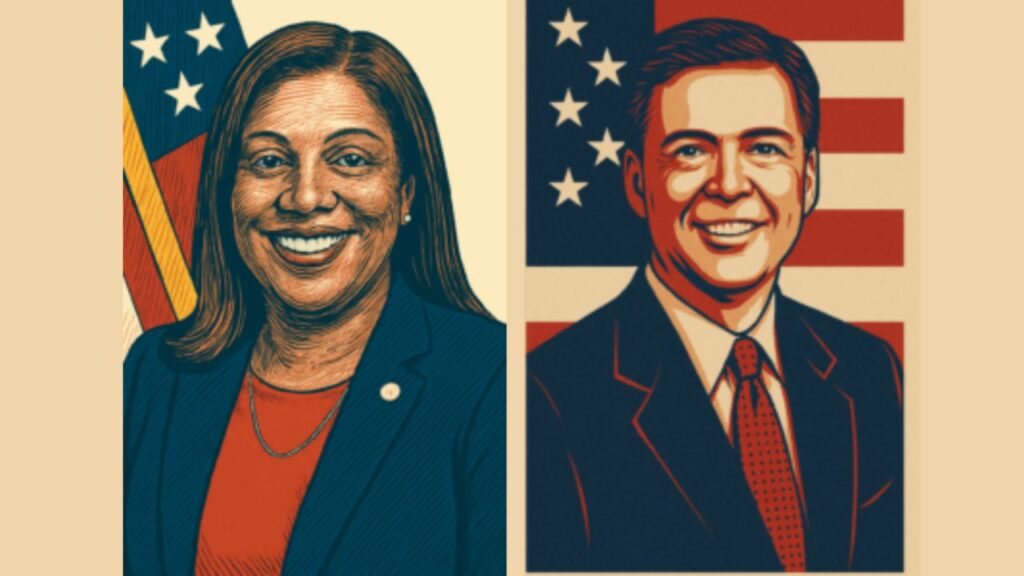
James and Comey Case Dismissed
A federal judge has dismissed the criminal cases against former FBI Director James Comey and New York Attorney General Letitia James, after ruling that the prosecutor who brought the charges was unlawfully appointed.
The prosecutor, Lindsey Halligan — appointed by the Department of Justice — had replaced the prior interim U.S. Attorney for the Eastern District of Virginia after the 120-day interim window allowed under federal law had expired. Because Halligan lacked lawful authority, her actions — including filing indictments — were deemed invalid by U.S. District Judge Cameron McGowan Currie.
As a result, the indictments against Comey (charged with lying to Congress and obstruction) and James (charged with bank / mortgage-fraud related offences) were thrown out. The dismissals were issued without prejudice — meaning the government could attempt to re-file the charges.

⚖️ Key Legal Outcome
-
The court ruled that the appointment of the prosecutor (Lindsey Halligan) was invalid, because it exceeded the 120-day interim period allowed under federal statute.
-
All prosecutorial actions taken under that appointment — including indictments against Comey and James — are legally void.
-
The criminal cases against both defendants were dismissed.
-
The dismissal was done without prejudice, which leaves open the possibility (at least theoretically) of re-filing, if a properly appointed prosecutor brings new charges.
-
The decision calls into question the legitimacy of other prosecutions brought under similarly controversial or disputed appointments — potentially affecting a broader slate of cases.

🧭 Why It Matters
-
Upholds rule of law and procedural integrity — the decision reinforces that proper legal procedure and lawful appointment processes are as critical as the substance of charges.
-
Checks prosecutorial power — it restricts the ability of the executive branch to use questionable interim-appointment shortcuts to press politically sensitive cases.
-
Protects defendants from invalid prosecutions — ensuring that indictments brought under flawed authority are not allowed to stand, thereby preserving individuals’ rights against illegal prosecution.
-
Preserves DOJ credibility — discourages politicized or rushed prosecutions driven by pressure rather than evidence and due process.
-
Sets precedent for future challenges — other defendants indicted under questionable prosecutor appointments may now challenge their cases successfully based on this ruling.
