
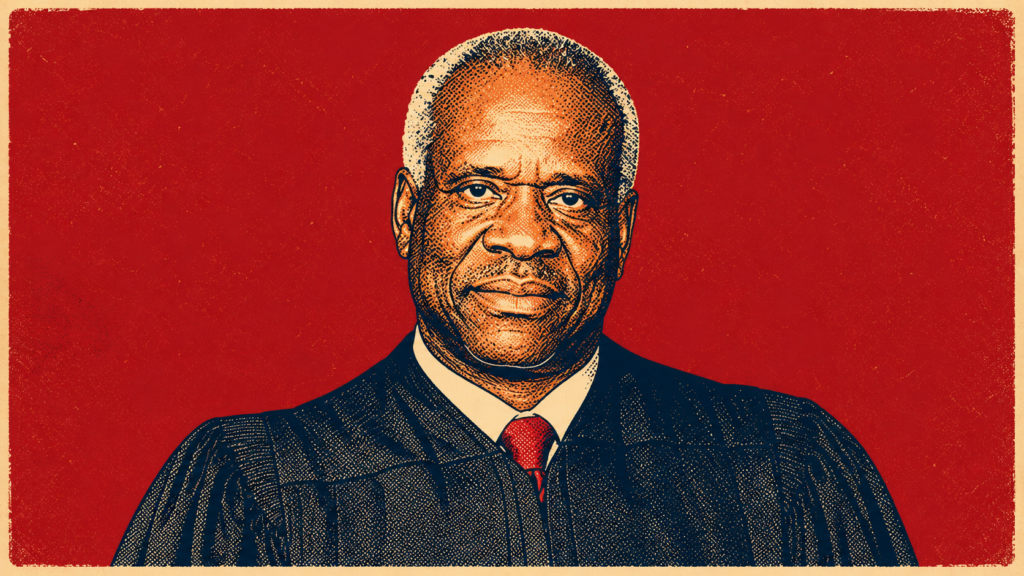
Judge Clarence Thomas
Clarence Thomas is an Associate Justice of the Supreme Court of the United States, serving since October 23, 1991. Nominated by President George H.W. Bush to succeed Justice Thurgood Marshall, he is the court’s second Black justice and currently its longest-serving member. He is the anchor of the court’s conservative wing, known for his strict adherence to originalism and his willingness to overturn long-standing precedents.
Personal Background:
-
- Born: June 23, 1948, in Pin Point, Georgia.
- Education: Earned a Bachelor of Arts from the College of the Holy Cross and a Juris Doctor from Yale Law School.
- Early Career: Served as an Assistant Attorney General of Missouri, a legislative assistant to Senator John Danforth, and Assistant Secretary for Civil Rights at the U.S. Department of Education.
Government and Judicial Career:
-
- EEOC Chair: Appointed by President Ronald Reagan as Chairman of the Equal Employment Opportunity Commission (EEOC), serving from 1982 to 1990.
- Appellate Court: Appointed by President George H.W. Bush to the U.S. Court of Appeals for the District of Columbia Circuit, serving from 1990 until his Supreme Court nomination in 1991.
Judicial Philosophy and Notable Stances:
-
- Strict Originalism: Believes the Constitution should be interpreted exactly as it was understood at the time of its drafting, frequently arguing that the court should correct its own past errors regardless of stare decisis (judicial precedent).
- Major Opinions: Authored the landmark Second Amendment decision New York State Rifle & Pistol Association v. Bruen (2022) and wrote a prominent concurring opinion in Dobbs v. Jackson Women’s Health Organization calling for the reconsideration of other substantive due process precedents.
- Silent Questioning: Historically famous for going years without asking questions during oral arguments, preferring to rely strictly on written briefs, though he became an active questioner following the court’s shift to remote and structured formats.
