
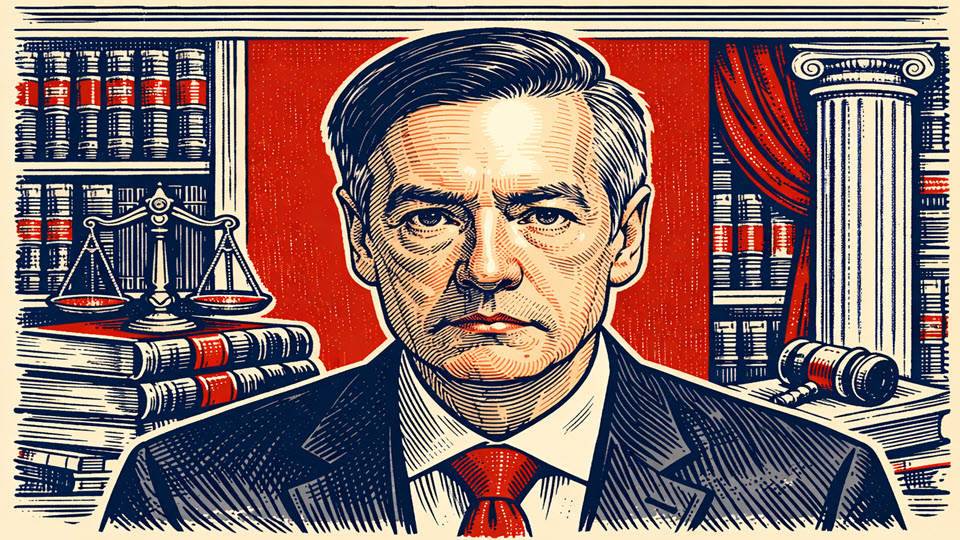
Kenneth Chesebro Stripped of License
Highlights
-
Disbarred by New York court for felony conduct tied to 2020 election
-
Pleaded guilty in Georgia to conspiracy to file false documents
-
Key architect of Trump’s fake‑electors plan post-2020 election
-
Suspended or disbarred in multiple jurisdictions
-
Violations include dishonesty, fraud, and serious ethical breaches
Introduction: From Legal Adviser to Disbarment
Kenneth John Chesebro, once a respected legal strategist with a Harvard pedigree, has now been formally disbarred in New York as a direct consequence of his involvement in the 2020 fake‑electors scheme. His case represents one of the most consequential attorney disciplinary actions stemming from efforts to overturn the results of the 2020 U.S. presidential election.
Born in 1961 in Wisconsin, Chesebro built a career in complex civil litigation and appellate practice. By 2020, he emerged as a behind-the-scenes figure in legal efforts supporting Donald Trump’s attempts to subvert the certification of electoral results.
The Fake‑Electors Plot and Chesebro’s Role
The fake‑electors strategy revolved around submitting unofficial slates of Republican electors in states where Joe Biden won, with the goal of creating legal ambiguity during the January 6, 2021 certification of the Electoral College vote. Chesebro authored several legal memos that provided the conceptual and procedural framework for this plan.
These memoranda outlined instructions for creating and submitting alternative elector certificates, argued for legal justifications under the Electoral Count Act, and suggested ways then‑Vice President Mike Pence could use the ambiguity to delay or alter the count. The plan was carried out in seven states, including Georgia, Michigan, and Arizona, where groups of Trump supporters signed documents falsely claiming to be duly certified electors.
Chesebro’s communications were key to the orchestration of this strategy. He advised local Republican officials and legal teams, guiding them on document formats, timing, and transmission procedures.
Criminal Prosecution and Plea Deal
In August 2023, Chesebro was indicted by a grand jury in Fulton County, Georgia, along with Donald Trump and 17 other individuals. The indictment alleged that Chesebro was part of a criminal enterprise designed to overturn Georgia’s election results. He faced multiple charges, including conspiracy to commit forgery, false statements, and impersonation of a public officer.
On October 20, 2023, just before his trial was set to begin, Chesebro accepted a plea deal. He pleaded guilty to a single felony count: conspiracy to commit filing of false documents. As part of the agreement, he received five years of probation, a $5,000 fine, 100 hours of community service, and agreed to testify in related prosecutions.
This conviction triggered a cascade of disciplinary actions across the states where he was licensed.
Timeline of Disciplinary Actions
October 2023: Guilty Plea in Georgia
Chesebro’s felony plea triggered automatic ethics referrals in multiple jurisdictions, including New York, California, Massachusetts, Florida, and Washington, D.C.
October 31, 2024: Suspension in New York
The New York Appellate Division, Third Department, suspended Chesebro from practicing law in the state. The court cited his felony conviction and the nature of his conduct as “serious crime” under state disciplinary rules. This was a preliminary step pending final determination.
Early 2025: Broader Suspensions
Other jurisdictions, including California and Washington, D.C., issued reciprocal suspensions, pending formal disciplinary proceedings. In each case, courts or bar authorities noted that Chesebro’s conduct involved misrepresentation and fraud, both disqualifying under ethical rules.
June 26, 2025: Disbarment in New York
New York’s Appellate Division issued its final ruling: Kenneth Chesebro was disbarred, effective immediately. The ruling emphasized that his role in the fake‑electors scheme constituted a fundamental breach of integrity and the public trust required of attorneys.
The court rejected a referee’s recommendation for continued suspension, concluding instead that permanent disbarment was necessary due to the seriousness of his offense and its implications for democratic governance.
Legal and Ethical Standards Behind Disbarment
1. Statutory Framework
In New York, Judiciary Law § 90 mandates that an attorney convicted of a felony—either in New York or elsewhere—can be disbarred if the conduct would constitute a felony under New York law. Even if the exact statute does not exist in New York, acts involving dishonesty, fraud, or deceit are considered “serious crimes” justifying disbarment.
Chesebro’s conviction in Georgia for conspiracy to file false documents fell squarely within this category. While the offense was not a New York statute per se, the underlying conduct mirrored crimes of fraud and deception recognized under New York’s Penal Law.
2. Professional Conduct Rules
The New York Rules of Professional Conduct—based on the ABA Model Rules—require that lawyers:
-
Not engage in conduct involving dishonesty, fraud, deceit, or misrepresentation (Rule 8.4)
-
Maintain candor toward tribunals and the public (Rule 3.3)
-
Avoid actions prejudicial to the administration of justice (Rule 8.4[d])
Chesebro violated all of these by intentionally drafting and promoting legal documents that falsely asserted electoral legitimacy, attempted to mislead federal and state officials, and undermined the lawful electoral process.
Broader Implications for the Legal Profession
Chesebro’s disbarment is emblematic of a broader reckoning for attorneys who participated in election subversion efforts. While some lawyers—such as Rudy Giuliani and John Eastman—still await final rulings in their disciplinary cases, the Chesebro decision signals that courts are willing to impose the profession’s ultimate sanction where legal misconduct undermines democracy.
This also raises questions about the role of legal ethics in politically charged contexts. Experts note that the bar’s responsibility is to remain independent of political influence while safeguarding the rule of law. Attorneys cannot shield themselves behind “legal advice” when such advice is part of a fraudulent or unlawful conspiracy.
Legal scholars have underscored that the disbarment sends a message: participation in schemes to overturn legitimate election outcomes is not protected legal advocacy—it is professional misconduct of the highest order.
What’s Next for Chesebro
Although disbarment in New York is permanent, Chesebro may attempt to petition for reinstatement after a number of years, though such efforts are rarely successful following felony convictions involving fraud.
He may still face disciplinary proceedings in other states if disbarment has not yet been finalized. He also remains a cooperating witness in Georgia’s ongoing racketeering case, which may further implicate other defendants.
Meanwhile, federal investigations and civil lawsuits related to the fake‑electors plot continue to unfold, and Chesebro’s testimony could prove critical in future proceedings.
Conclusion: Rule of Law vs. Partisan Legal Advocacy
Kenneth Chesebro’s disbarment marks one of the most significant outcomes to date in the legal fallout from the 2020 election. It underscores a core truth about the legal profession: that the law is not a partisan tool and that attorneys who misuse their license to serve unlawful ends can and will be held accountable.
While the fake‑electors scheme failed, the attempt exposed vulnerabilities in electoral oversight—and the critical importance of lawyers adhering to ethical standards even during political crises. Chesebro’s case will be studied as a cautionary tale for decades to come.
Other Trump lawyers who have been disbarred include:
-
Rudy Giuliani
-
Michael Cohen
-
John Eastman

