
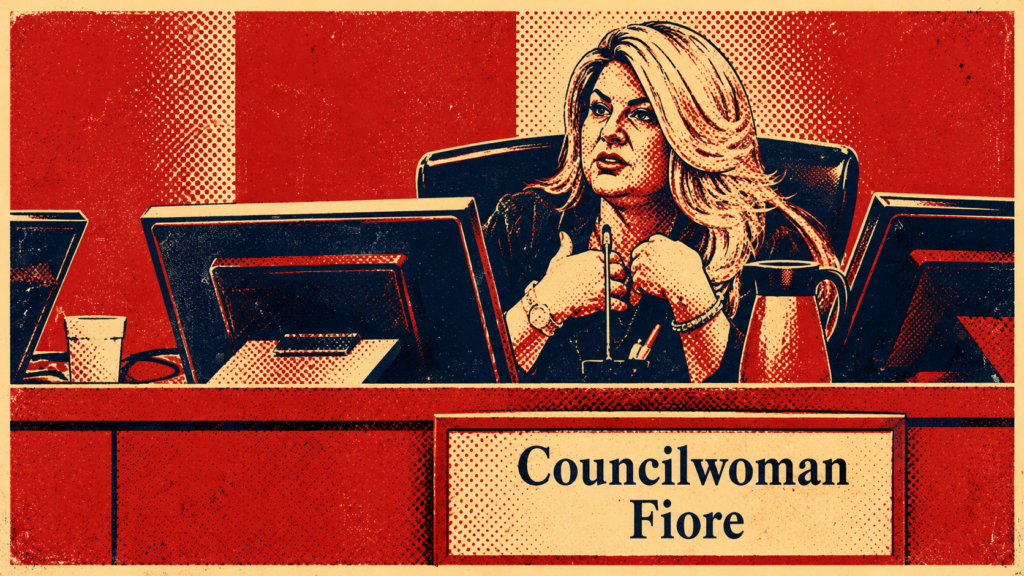
Nevada Commission on Judicial Discipline Files Formal Charges Against Judge Michele Fiore
The Nevada Commission on Judicial Discipline has formally filed misconduct charges against Michele Fiore, intensifying a long-running legal and ethical controversy surrounding the suspended Nye County judge. The charges mark the latest development in a broader disciplinary investigation that began after Fiore’s federal criminal conviction on wire fraud and conspiracy charges related to charitable donations intended for a fallen police officer memorial.
According to reports and court filings, the Nevada Commission on Judicial Discipline formally accused Fiore of violating multiple provisions of the Nevada Code of Judicial Conduct. The disciplinary complaint alleges that her prior criminal conduct and related actions undermined public confidence in the judiciary and damaged the integrity of the judicial office. The formal charges could potentially lead to severe disciplinary consequences, including permanent removal from the bench.
Fiore, a former Las Vegas city councilwoman and outspoken Republican political figure, was elected as a justice of the peace in Pahrump, Nevada, before becoming the subject of federal prosecution. Prosecutors accused her of diverting funds raised for a memorial honoring a fallen police officer and using portions of the money for personal expenses, including cosmetic procedures, rent, and her daughter’s wedding. In 2024, a federal jury convicted her on several counts of wire fraud and conspiracy.
Although President Donald Trump later granted Fiore a presidential pardon, the pardon did not automatically end disciplinary proceedings against her judicial office. The Nevada Commission on Judicial Discipline initially suspended Fiore without pay following the criminal conviction. After the pardon, the commission revised the suspension to allow her to remain suspended with pay while additional investigations continued.
The newly filed formal complaint focuses not only on Fiore’s criminal conduct but also on broader allegations involving violations of judicial ethics rules. According to court documents referenced in the reports, the commission alleges that Fiore violated Nevada judicial conduct rules requiring judges to uphold the integrity, impartiality, and independence of the judiciary.
Fiore has vigorously fought the disciplinary proceedings in court. Her legal team argues that the Nevada Commission on Judicial Discipline lacks jurisdiction because much of the alleged misconduct occurred before she became a judge. Attorneys for Fiore contend that actions predating her judicial service should not be used as grounds for judicial discipline.
This jurisdictional dispute has already reached the Nevada Supreme Court. During oral arguments earlier this year, Fiore’s lawyers argued that the commission improperly extended its authority to conduct unrelated to her judicial duties. Meanwhile, attorneys for the commission argued that judges can still face discipline for pre-bench misconduct if it reflects negatively on judicial integrity or public trust in the courts.

The Nevada Supreme Court has not yet issued a final ruling on the jurisdictional challenge, but it has allowed disciplinary proceedings to continue while broader legal questions are resolved. Recent rulings from the court have upheld Fiore’s suspension with pay pending the outcome of the disciplinary process.
The case has drawn substantial public attention in Nevada because Fiore has remained a polarizing political figure for years. She previously served in the Nevada Legislature and on the Las Vegas City Council, frequently generating controversy through outspoken political statements and policy positions. Her transition from elected politician to judge, followed by criminal prosecution and disciplinary proceedings, has created an unusually high-profile judicial ethics case in the state.
Legal experts note that the matter raises broader questions about judicial accountability and the scope of disciplinary authority. One key issue is whether judicial oversight commissions can sanction judges for misconduct committed before taking office. The Nevada Supreme Court’s eventual ruling could therefore establish an important precedent for future judicial discipline cases.
The controversy also highlights the limits of presidential pardons. While Trump’s pardon eliminated Fiore’s federal criminal penalties, it did not erase the underlying conduct or automatically restore her standing within Nevada’s judicial system. Courts and disciplinary agencies generally maintain authority to impose professional consequences even after criminal pardons are granted.
If the commission ultimately finds that Fiore violated judicial ethics rules, possible penalties could include censure, suspension, or permanent removal from office. Public disciplinary hearings and additional court proceedings are expected in the coming months as the case continues to unfold.
Ultimately, the formal charges against Fiore represent a major escalation in Nevada’s judicial discipline proceedings and could become a landmark case regarding judicial ethics, pre-office misconduct, and the continuing legal impact of presidential pardons. The outcome may significantly influence how judicial oversight agencies handle similar cases in the future.

Key Legal Outcome
- The Nevada Commission on Judicial Discipline formally filed misconduct charges against Michele Fiore.
- The charges allege violations of Nevada judicial conduct rules tied to integrity and public trust.
- Fiore remains suspended with pay while disciplinary proceedings continue.
- Fiore argues the commission lacks jurisdiction because the alleged misconduct occurred before she became a judge.
- The Nevada Supreme Court is reviewing related legal challenges surrounding the disciplinary process.
Why It Matters
- Could establish precedent on whether judges may be disciplined for conduct before taking office.
- Highlights limits of presidential pardons in professional disciplinary proceedings.
- Raises broader questions about judicial ethics and accountability standards.
- Tests the authority of state judicial oversight commissions.
- May influence future judicial misconduct investigations nationwide.
