
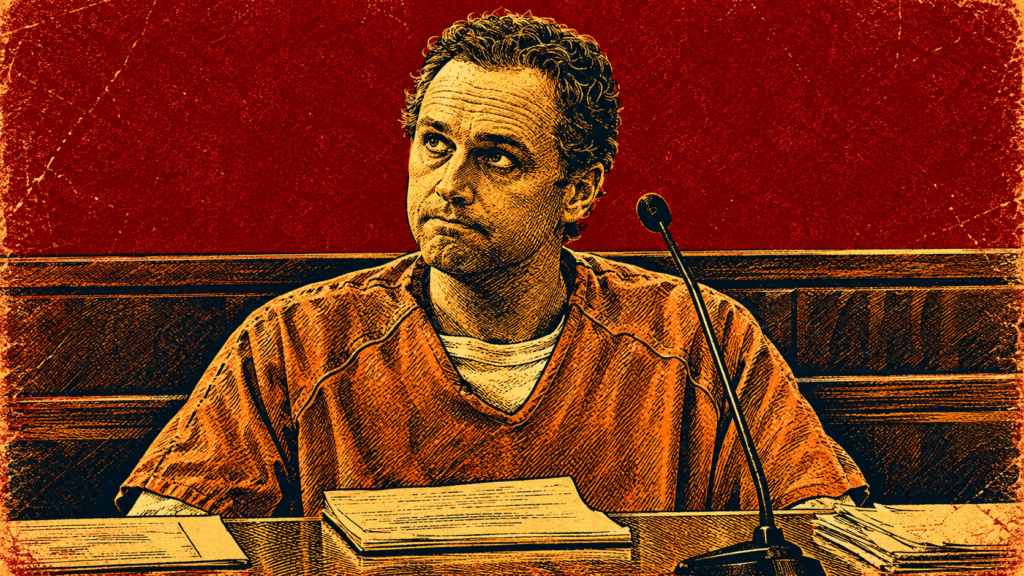
Plastic Surgeon Guilty of Lawyer’s Murder, Faces Death Penalty
Former Florida plastic surgeon Tomasz Kosowski was found guilty of first-degree murder Wednesday in the 2023 disappearance and presumed killing of attorney Steven Cozzi, more than three years after Cozzi vanished from the law office where he worked. Pinellas County Circuit Judge Joseph Bulone delivered the verdict after a six-day trial in which Kosowski represented himself and chose to have the judge, rather than a jury, decide the case.
Kosowski, 47, had been charged with first-degree murder in connection with Cozzi’s disappearance on March 21, 2023. Cozzi, 41, was working at the Blanchard Law firm in Largo, Florida, where he represented defendants in a medical-billing lawsuit brought by Kosowski against his former employer. Prosecutors argued that the increasingly contentious civil dispute gave Kosowski a motive to target Cozzi.
The prosecution’s case centered on evidence gathered from the law office, surveillance systems, vehicles, electronic records and Kosowski’s property. Prosecutors said Kosowski had spent months watching and researching Cozzi, eventually entering the law office on the morning Cozzi disappeared. Investigators said blood found in the firm’s bathroom matched Cozzi’s DNA.
Prosecutors alleged that Kosowski attacked Cozzi in the bathroom, placed his body in a wheeled cart and moved it out of the building. Surveillance footage was presented as evidence showing a person leaving the office with a cart and subsequently loading it into a vehicle. Investigators later connected Kosowski to a gray Toyota Tundra and other vehicles that prosecutors said were involved in moving the body.
Cozzi’s body has never been recovered. Prosecutors nevertheless argued that the physical evidence, surveillance footage, DNA evidence and the abrupt end to Cozzi’s known activity established that he had been killed. They also presented evidence that they said showed Kosowski had been preparing for the crime for months, including internet searches, purchases of carts and other activity connected to Cozzi and the vehicles.
During closing arguments, Kosowski disputed the prosecution’s reconstruction of events and maintained that prosecutors had not proved the required elements of first-degree murder. He questioned how a person could have moved Cozzi’s approximately 195-pound body in the manner alleged by prosecutors without being detected. He also challenged the interpretation of the blood evidence, arguing that investigators could not establish precisely how Cozzi was injured or died from the evidence found in the bathroom.
Kosowski also pointed to what he described as inconsistencies in the prosecution’s timeline and evidence. He argued that activity associated with Cozzi after the time prosecutors said he was killed raised questions about the state’s theory. He additionally suggested that some evidence could have been mishandled or planted.
The prosecution countered that the evidence should be considered collectively rather than individually. Prosecutors emphasized the blood matching Cozzi’s DNA, surveillance footage, electronic records, vehicle movements and evidence of Kosowski’s interactions with and research into Cozzi. They argued that the absence of a recovered body did not prevent the state from proving murder.

After closing arguments, Judge Bulone recessed briefly before returning with the verdict. Kosowski was found guilty as charged.
The case now moves to the penalty phase. Prosecutors are seeking the death penalty. Kosowski has indicated that he wants to continue representing himself during that phase as well. Because of concerns surrounding his decision to proceed without counsel, however, the judge appointed special counsel to investigate potential mitigating circumstances even though Kosowski said he did not want assistance.
Kosowski therefore has not yet been sentenced. The possible punishments are death or life imprisonment without the possibility of parole, depending on the outcome of the penalty proceedings.
The verdict resolves the criminal trial’s central question of guilt, but it does not resolve every issue surrounding Cozzi’s disappearance. Most notably, Cozzi’s remains have never been found. Prosecutors’ case was instead based on circumstantial and forensic evidence that they argued established his death and Kosowski’s responsibility.
The prosecution also portrayed the murder as the culmination of a prolonged dispute and alleged fixation on Cozzi. Those descriptions were arguments presented by prosecutors during trial rather than independent findings about Kosowski’s motives beyond what was established by the court’s guilty verdict.
Kosowski’s decision to represent himself was an unusual feature of the proceedings. He waived his right to a jury trial, meaning Judge Bulone alone evaluated the evidence and determined whether the prosecution had proved the charge beyond a reasonable doubt. Court records show that Kosowski had also litigated several pretrial issues himself, including challenges involving evidence and witness testimony.
The guilty verdict marks the end of the trial phase but not the conclusion of the case. The next major legal issue is whether Kosowski will receive a death sentence or life imprisonment without parole. The court must consider the applicable aggravating and mitigating circumstances before imposing punishment.

Key Legal Outcome
- Tomasz Kosowski was found guilty of first-degree murder in the disappearance and killing of attorney Steven Cozzi.
- The verdict was issued by Judge Joseph Bulone, because Kosowski waived his right to a jury trial.
- The prosecution secured a murder conviction despite Cozzi’s body never being recovered, relying on forensic, surveillance, electronic and circumstantial evidence.
- Kosowski faces either the death penalty or life imprisonment without parole; sentencing has not yet occurred.
- Prosecutors are pursuing the death penalty, while the court has appointed special counsel to investigate mitigating circumstances for the penalty phase.
Why It Matters
- The case demonstrates that a murder conviction can be obtained without recovery of a victim’s remains when prosecutors present sufficient other evidence establishing death and responsibility.
- Kosowski’s decision to act as his own attorney made the proceedings unusual, particularly because the case involves potential capital punishment.
- The verdict shifts the legal focus from determining guilt to determining the appropriate sentence.
- The case illustrates how prosecutors can build a murder case from multiple forms of circumstantial evidence, including surveillance, DNA, electronic records and vehicle movements.
- The unresolved location of Cozzi’s remains remains a significant part of the case’s factual history even after the murder conviction.
