
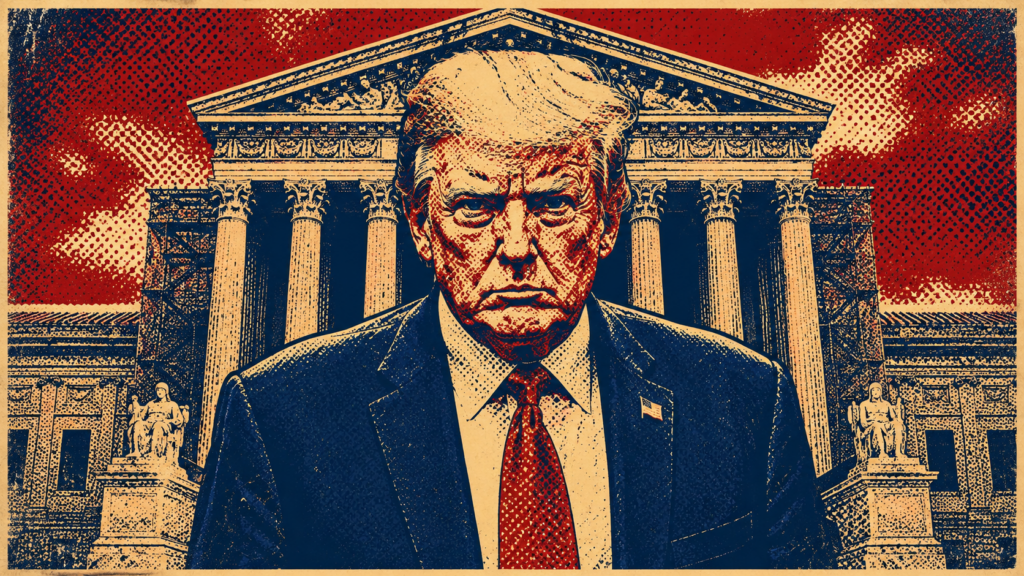
Supreme Court Justices Echo Trump in Reprimanding Defiant Lower Courts
In an unusual twist, some U.S. Supreme Court justices have echoed language reminiscent of Donald Trump in publicly reprimanding lower courts for ruling inconsistently with Supreme Court precedents. Justice Neil Gorsuch, in a high-profile emergency decision allowing the Trump administration to cancel nearly $800 million in NIH research grants, issued a stark admonishment: “Lower court judges may sometimes disagree with this court’s decisions, but they are never free to defy them.” Justice Brett Kavanaugh joined the rebuke—marking a rare moment of alignment of tone between the bench and the president.
Gorsuch’s critique followed several instances this summer in which lower courts invoked the judiciary’s authority to challenge or delay Trump-era executive actions. The Supreme Court has increasingly intervened on the so-called “shadow docket”—rulings issued without full briefing or explanation—to reverse or override those lower court decisions. Scholars and critics warn that this trend has undermined both transparency and legal certainty.
The NIH grants case was especially noteworthy. Lower courts had blocked these cuts, citing concerns that they discriminated, particularly given the programs targeted minority and LGBTQ+ health research. The Supreme Court’s emergency order reversed that block but provided little reasoning—prompting growing criticism that the Court is forcing alignment without adequate explanation.
Clashes over the Court’s approach have surfaced prominently. Liberal justices, especially Sonia Sotomayor, have sharply criticized what they view as the Court “rewarding lawlessness” by condoning lower court disregard for emergency orders. Sotomayor warned this pattern could erode respect for the rule of law. Meanwhile, analysts like Steve Vladeck argue the Court is placing a higher priority on preserving its emergency precedents than ensuring executive accountability.
Beyond the NIH case, the Court continues to assert dominance over lower courts via its shadow docket. In cases ranging from agency control to immigration enforcement, justices have relied on prior rulings—even when not directly on the merits—to grant emergency stays or overturn injunctions. Critics say this leaves lower courts—and the public—guessing which past decisions matter, effectively demanding compliance without clarity.

Key Legal Outcomes
-
Supremacy of emergency precedent: Lower courts are being reminded that Supreme Court emergency orders—even unexplained ones—must be followed.
-
Reversal of NIH funding injunction: The Supreme Court lifted a lower-court block on $783 million in NIH grants tied to DEI and minority health programs.
-
Increased reliance on the shadow docket: The Court’s use of emergency orders to resolve major policy disputes without full briefing has become a model.
-
Heightened tension within the Court: Liberal justices, particularly Sotomayor and Jackson, have issued scathing dissents highlighting the dangers of unaccountable judicial authority.
-
Precedent over procedure: Emergency rulings are being treated as de facto binding precedent, even when not formally written or explained.

Why It Matters
-
Signals Supreme Court willingness to centralize control and limit lower court pushback.
-
Raises concerns about reduced transparency and unpredictability in emergency court decisions.
-
Prioritizes preservation of precedent over clarity or legal reasoning.
-
Highlights shifting norms in judicial-deference and institutional power dynamics.
-
Sets a dramatic tone for Supreme Court’s role amid politically charged governance.
