
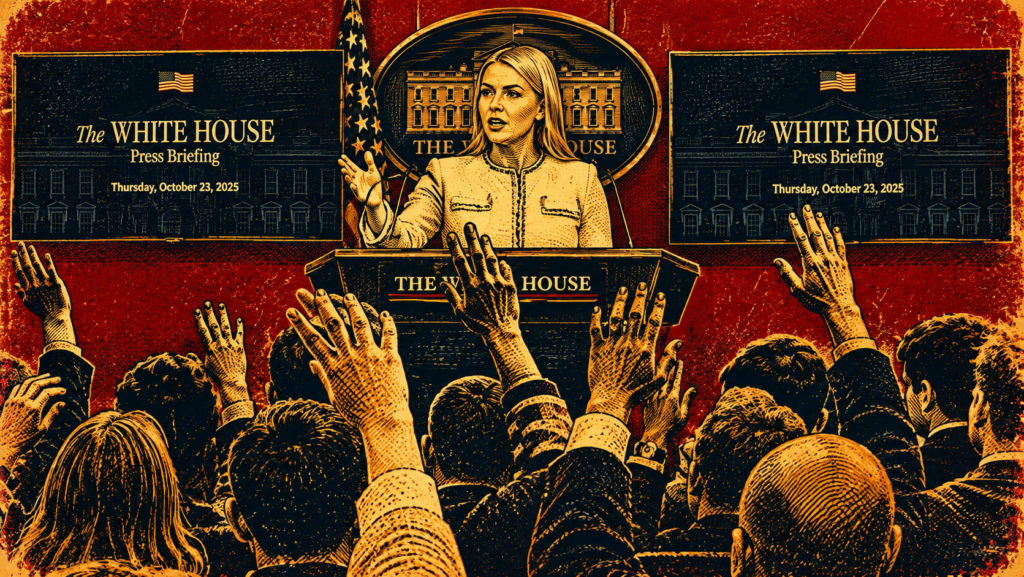
Trump Media Ban Faces Federal Court Challenge
A federal judge in Washington, D.C., concluded a hearing Wednesday without immediately ruling on whether President Donald Trump’s administration can bar CNN, MS NOW and Politico journalists from the White House. U.S. District Judge Timothy Kelly heard arguments from the three news organizations and the Justice Department over the outlets’ request for a temporary restraining order that would restore their access while their broader constitutional challenge proceeds.
Kelly said he would consider the arguments and try to issue a decision quickly. The absence of an immediate ruling means the restrictions remain in effect for now.
The dispute began after Trump announced that CNN, MS NOW and Politico would be barred from the White House. Trump said the organizations should not be allowed to continue covering the presidency while, in his view, publishing false or misleading reports. The administration subsequently cited national-security concerns and specific news reports as reasons for revoking the outlets’ access.
The three organizations filed a federal lawsuit challenging the ban. They argue that the administration violated the First Amendment by retaliating against them because of their reporting and viewpoints. They also argue that the government violated the Fifth Amendment’s due-process protections by revoking their press credentials without giving them advance notice or a meaningful opportunity to contest the decision.
The Justice Department has defended the administration’s authority to control access to the White House. Government lawyers argued that access to the White House is a privilege rather than an entitlement and that the president has authority to restrict access when national-security concerns are involved.
The administration has pointed to several reports as examples of the conduct it considers problematic. Those include reporting by CNN involving construction details concerning a bunker beneath the White House’s East Wing, MS NOW reporting concerning the effect of the Iran war on U.S. military munitions, and a Politico report concerning funding for the White House ballroom and security improvements. The administration also cited a Politico report about the Republican Party’s midterm convention.
The government argues that publication of sensitive information can create national-security concerns by requiring officials to determine whether information is classified and assess potential risks.
The news organizations dispute that justification. Their attorney, Theodore Boutrous, argued that Trump’s own public statements show that the restrictions were prompted by disagreement with the outlets’ coverage. He characterized the national-security justification as a later explanation for a decision that had already been made.
Kelly focused heavily on the administration’s compliance with earlier legal precedents governing White House press credentials. Reuters reported that the judge questioned whether the administration had followed two decisions from the U.S. Court of Appeals for the D.C. Circuit, including Sherrill v. Knight, a 1977 case concerning White House press access, and Karem v. Trump, a more recent case addressing due process.
Those precedents are significant because they establish procedural protections when the government seeks to revoke a journalist’s access. Kelly said the process described in those cases did not appear to have been followed before the three outlets lost their access.
The timing of the administration’s letters to the news organizations also became an important issue. The White House sent letters to CNN, MS NOW and Politico after their access had already been revoked. The letters identified alleged violations and gave the organizations an opportunity to contest the government’s concerns.
Kelly questioned how those letters could satisfy due-process requirements if the outlets received them only after their credentials had already been taken away. He noted that a notice delivered after the revocation does not necessarily give journalists advance information about the standards they were expected to follow.
The Justice Department argued that the letters nevertheless provided sufficient explanation and an opportunity to respond. Government lawyers also argued that the earlier appellate cases were wrongly decided and that the administration should have greater authority over White House access.

Kelly responded that, regardless of whether the government believes the earlier decisions were correct, a district judge is generally required to follow applicable appellate precedent.
The judge’s questions are significant but do not constitute a final ruling that the administration’s policy is unconstitutional. The hearing addressed the outlets’ request for temporary emergency relief, not necessarily the ultimate resolution of the lawsuit.
The case also has a connection to Kelly’s earlier ruling involving CNN correspondent Jim Acosta during Trump’s first presidency. In 2018, Kelly ordered the White House to restore Acosta’s press credentials after concluding that the government had not followed adequate procedures when revoking his access following a contentious exchange between Acosta and Trump.
The current lawsuit therefore places Kelly in a familiar legal dispute involving presidential control of White House press access. Trump has criticized Kelly’s handling of the earlier case and has publicly expressed dissatisfaction with his appointment of the judge.
The dispute has also prompted broader support from media organizations and press-freedom groups. A coalition filed a brief supporting CNN, MS NOW and Politico, arguing that government officials cannot selectively restrict journalists because of their viewpoints or reporting once access to a government-controlled press forum has been established.
Other news organizations have also taken collective action in response to the restrictions. Television networks temporarily suspended portions of pooled coverage of Trump’s movements in solidarity with the outlets that were excluded. The traditional press pool allows participating organizations to share coverage of presidential movements with other news organizations.
The legal fight therefore involves two overlapping questions: how much discretion a president has to determine who receives access to the White House, and what constitutional limits apply once the government has established a press-access system.
The administration maintains that national security and presidential authority justify its decision. The news organizations maintain that the restrictions are unconstitutional retaliation for protected journalism and that the administration failed to provide the procedural protections required by law.
For now, the judge has not resolved those competing arguments. The immediate question is whether the three outlets will regain access while the broader lawsuit proceeds. A later ruling could also address the constitutional limits on presidential control over press credentials more broadly.

Key Legal Outcome
- Judge Timothy Kelly did not issue a ruling at the Sept. 23 hearing.
- CNN, MS NOW and Politico are seeking a temporary restraining order restoring their White House access.
- Kelly questioned whether the administration followed applicable appellate precedents requiring due process before revoking press access.
- The Justice Department argues that White House access is a privilege and that national-security concerns justified the restrictions.
- The underlying lawsuit alleges violations of the First Amendment and Fifth Amendment.
Why It Matters
- The case could clarify constitutional limits on presidential control over White House press access.
- Kelly’s questions focused on whether the administration provided adequate notice and an opportunity to contest the credential revocations.
- The dispute tests how national-security claims interact with First Amendment protections for news organizations.
- A ruling on the temporary restraining order could determine whether the three outlets regain access during the litigation.
- The case could establish or reinforce legal standards governing press credentials for future administrations.
Related:
