
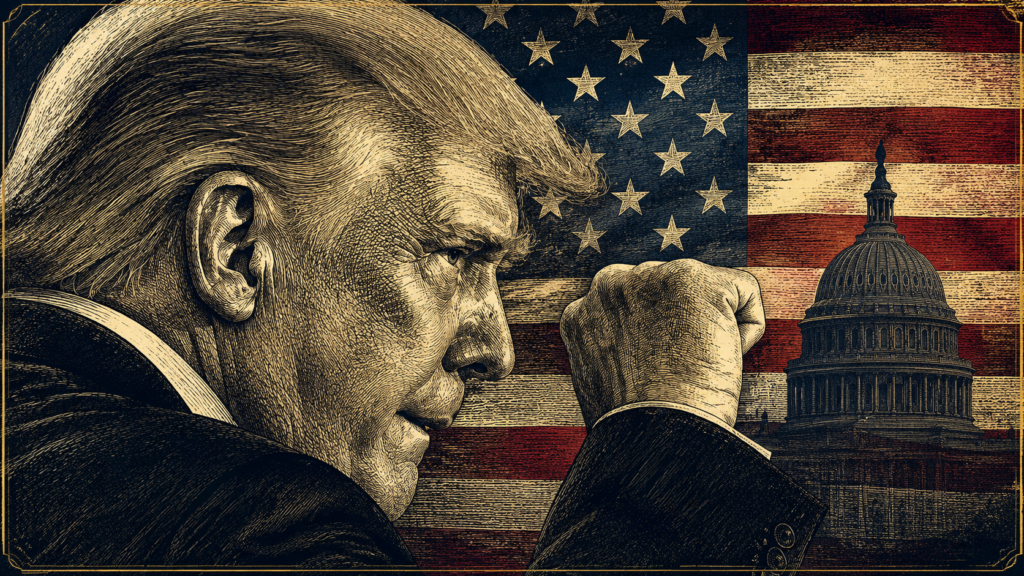
Trump Suffers Losses But Wins Bigger Constitutional Battle
Although President Donald Trump suffered several high-profile defeats at the U.S. Supreme Court during its 2025–2026 term, the Court ultimately strengthened presidential authority in ways that could have a lasting impact on the executive branch, according to legal experts. The mixed record illustrates how the Court rejected some of Trump’s most aggressive policy initiatives while embracing his broader vision of executive power.
Among Trump’s most notable setbacks was the Court’s decision preserving birthright citizenship, rejecting his effort to restrict automatic U.S. citizenship for children born in the United States. The justices also refused to allow Trump to immediately remove Federal Reserve Governor Lisa Cook, leaving her in office while litigation continues. In separate rulings, federal courts also blocked portions of Trump’s tariff policies and other executive actions.
Despite those defeats, the Supreme Court delivered several victories that significantly expanded presidential authority. Perhaps the most consequential came when the Court overturned the 1935 Humphrey’s Executor precedent, ruling that presidents generally have the constitutional authority to remove leaders of independent federal agencies. The decision gives Trump—and future presidents—greater control over executive officials and marks one of the most significant shifts in separation-of-powers jurisprudence in decades.
The Court also repeatedly sided with the Trump administration in emergency appeals through its so-called shadow docket, allowing several administration policies to take effect while litigation continues. Those orders permitted Trump to move forward with portions of his immigration agenda, including deportation initiatives and other executive actions challenged in lower courts. While some of those cases remain unresolved, the Court’s willingness to grant emergency relief provided important practical victories for the administration.
Immigration proved to be one of Trump’s strongest areas before the Court. The conservative majority consistently showed greater deference to executive authority over immigration enforcement than lower courts had, allowing several administration policies to remain in effect pending further judicial review. Legal scholars said the rulings reflect the Court’s broader view that presidents possess substantial constitutional authority over immigration and national security matters.

The Court also handed conservatives victories beyond executive power. During the term, the justices narrowed portions of the Voting Rights Act, upheld state restrictions affecting transgender athletes, and struck down federal limits on coordinated campaign spending by political parties. Although these cases did not directly involve Trump, they aligned with many longstanding conservative legal priorities supported by his administration and allies.
Legal experts told Reuters that the overall pattern demonstrates the Court’s willingness to restrain some of Trump’s individual policies while simultaneously strengthening the presidency as an institution. Rather than serving as an automatic ally or opponent, the Court frequently distinguished between specific executive actions it viewed as legally flawed and broader constitutional questions concerning presidential authority.
Some constitutional scholars argue that the Court has continued a years-long trend toward expanding executive power under Article II of the Constitution. Critics warn that weakening congressional checks on presidential authority could upset the balance among the three branches of government. Supporters counter that the decisions restore democratic accountability by ensuring executive officials remain answerable to an elected president.
The mixed record also illustrates the increasingly influential role of the Court’s conservative majority. While Trump did not prevail in every case involving his administration, many of the most consequential constitutional rulings favored legal theories advanced by his administration or reflected judicial philosophies championed by the conservative legal movement. Reuters noted that the Court often took a different approach to Trump’s executive authority than it had toward similar actions by previous administrations, particularly those of Democratic presidents.
As the Court begins its summer recess, the lasting significance of the term may not be the individual cases Trump lost, but the broader constitutional doctrines the justices embraced. By expanding presidential removal authority, permitting key immigration policies to proceed, and continuing to reshape administrative law, the Court reinforced executive power in ways that will likely influence not only Trump’s presidency but future administrations regardless of political party.

⚖️ Key Legal Outcomes
- Trump lost several headline cases, including birthright citizenship and his attempt to remove Federal Reserve Governor Lisa Cook.
- The Supreme Court nevertheless expanded presidential authority by overturning Humphrey’s Executor.
- The Court repeatedly granted the administration emergency relief in immigration cases.
- Conservative rulings also reshaped campaign finance, voting rights, and transgender-rights litigation.
- The term reinforced presidential power while limiting some individual executive actions.
📌 Why It Matters
- Strengthens presidential authority beyond Trump’s administration.
- Reshapes the balance of power between Congress and the executive branch.
- Continues the Court’s conservative transformation of constitutional law.
- Influences how future presidents may control federal agencies.
- Demonstrates that losing individual cases can still produce broader constitutional victories.
