
Trump’s Emergency Tariffs Are Illegal, Supreme Court Rules
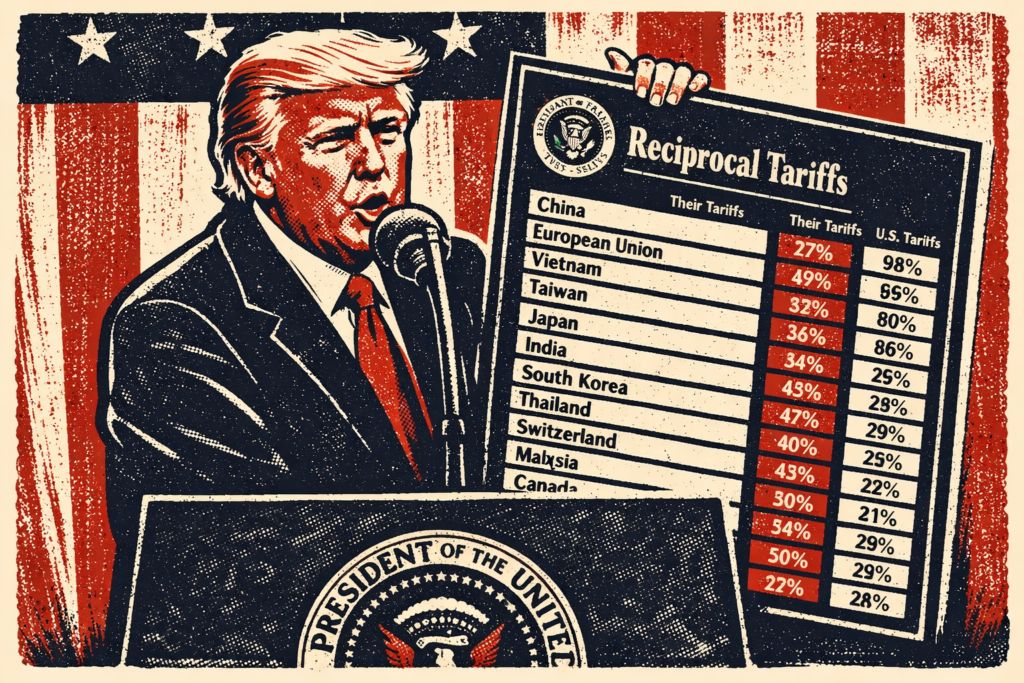
On Friday, February 20, 2026, the U.S. Supreme Court delivered a landmark decision striking down President Donald Trump’s sweeping emergency-imposed tariffs, ruling that he violated federal law by unilaterally imposing broad import taxes across the globe without congressional authorization. The ruling, which was issued in a 6–3 majority opinion, represents one of the most significant legal rebukes the Trump administration has faced from the conservative-leaning high court and marks a crucial check on executive authority over economic policy.
Chief Justice John Roberts, writing for the majority, concluded that the legal authority Trump invoked — the International Emergency Economic Powers Act (IEEPA) of 1977 — does not grant the president the power to impose tariffs of unlimited reach, duration, and scope. The court emphasized that only Congress has the constitutional power to levy tariffs, making the administration’s use of IEEPA in this context legally invalid. The decision underlined the importance of the Constitution’s structure, which confines the federal government’s taxation and commerce powers primarily to the legislative branch.
In its opinion, the court rejected the administration’s contention that the term “regulate … importation” in IEEPA implicitly included the authority to tax imports through tariffs. Roberts noted that neither “tariff” nor “duty” appears within the statutory language, and Congress historically delegates tariff authority clearly and with explicit restrictions in other statutes. The court pointed to the major questions doctrine, which requires clear congressional authorization when presidential actions have profound economic and political consequences.
Justices Amy Coney Barrett and Neil Gorsuch joined the majority opinion along with the three liberal justices and Chief Justice Roberts. The dissenting opinion, authored by Justice Brett Kavanaugh and joined by Justices Clarence Thomas and Samuel Alito, argued that IEEPA’s broad language gives the executive branch discretion to regulate imports and that historical context supported such power. Nonetheless, the majority remained unconvinced and held firm in its interpretation.

The ruling does not directly resolve what should happen to the more than $130 billion in tariffs already collected under the invalidated authority. The Supreme Court’s opinion was silent on the issue of refunds, meaning that lower courts and the federal government will have to determine how to handle requests from businesses and importers seeking repayment. Analysts say this could lead to protracted legal battles and complex administrative processes over years.
Trump reacted with sharp criticism following the ruling, calling it “a disgrace” and lambasting members of the court. According to reports, the president singled out Justices Barrett and Gorsuch — whom he appointed — labeling their decision disappointing and questioning their judicial judgment. He also indicated that he does not intend to seek congressional approval for tariffs and instead will explore alternative statutory mechanisms to implement import taxes.
In response to the decision, the White House has signaled a pivot toward other legal authorities. Within hours, Trump announced plans to impose a temporary 10% global tariff under Section 122 of the Trade Act of 1974, which allows the president to implement import duties without extensive procedural requirements for up to 150 days. The administration also plans to launch fresh trade investigations under Section 301 of the Trade Act, which could lead to more targeted tariffs based on unfair trade practices.
This ruling is seen as a significant blow to the Trump administration’s core economic agenda, particularly its use of tariffs as a central tool in trade negotiations and geopolitical leverage. Trump’s tariff policy, which affected major trading partners including China, Canada, and Mexico, was a defining feature of his economic strategy and had deep implications for global trade relations, domestic inflation, and supply chain costs. The court’s decision reaffirms the constitutional boundary between legislative and executive powers, reaffirming that trade and tariffs — fundamental elements of economic policy — fall squarely within Congress’s authority.
Economists and legal observers alike have called the ruling one of the most consequential decisions on executive trade authority in decades, comparable in scope to historical checks on presidential power in other major economic cases. Beyond its immediate economic impact, the decision reinforces judicial willingness to curb expansive executive actions that stretch statutory language beyond its clear meaning.

⚖️ Key Legal Outcomes
-
Supreme Court invalidates President Trump’s emergency tariff authority, ruling that he lacked legal power under IEEPA to impose broad import tariffs.
-
Court reinforces constitutional separation of powers, reiterating that only Congress may authorize tariff imposition except where clearly stated in law.
-
Bench marked a major judicial check on executive economic power, representing one of the most significant rulings against Trump’s policies.
-
Uncertainty remains over repayment of collected tariffs, as the court did not address how refunds should be managed, leaving lower courts to decide.
-
Triggers legal and policy shifts, prompting alternative tariff strategies under other statutes like the Trade Act of 1974.
⭐ Why It Matters
-
Limits presidential authority under emergency powers for imposing economic measures.
-
Clarifies statutory interpretation of trade laws and executive power.
-
Potentially affects global trade policy and economic markets.
-
Raises legal questions on refunds and taxpayer rights.
-
Signals future constraints on unilateral economic actions by the executive branch.

