
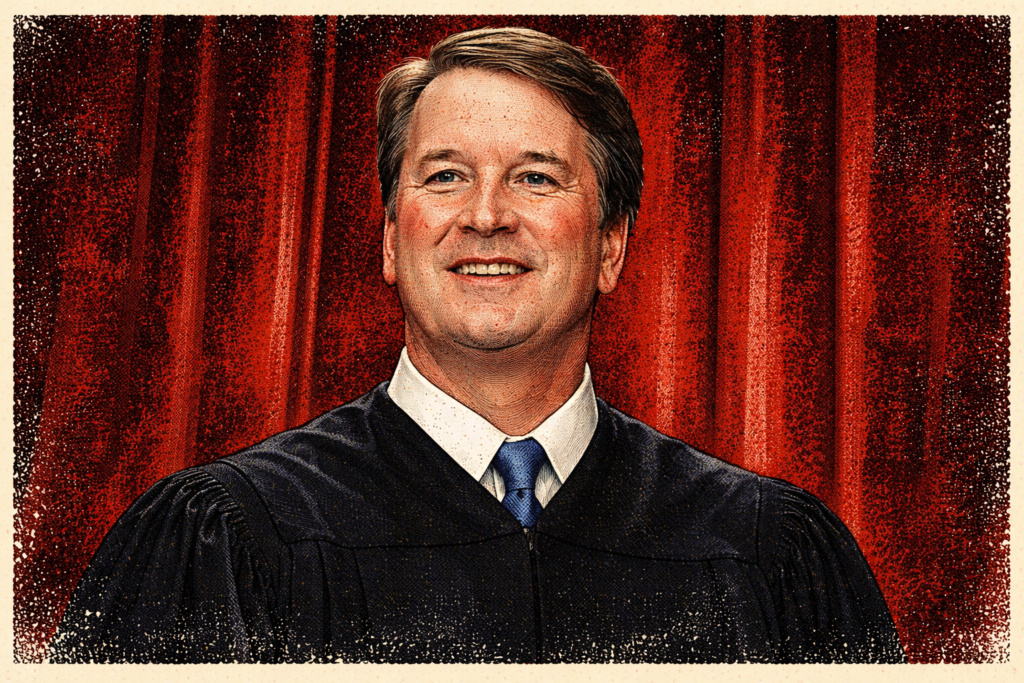
Brett Kavanaugh Admits ‘Trumpy’ Shadow‑Docket Rulings Are Tearing SCOTUS Apart
At a judicial conference in Missouri on August 1, 2025, Supreme Court Justice Brett Kavanaugh made a rare and candid acknowledgment: the increasing reliance on the Court’s so‑called “shadow docket”—that is, fast, unexplained emergency rulings—has sparked internal divisions among the justices .
Kavanaugh described the shadow docket as a critical tool—especially during the Trump administration—used to advance policies without the usual full briefing, oral argument, or detailed written explanation. He argued that avoiding written opinions in these situations can prevent “lock‑in effect”, where a premature justification might unfairly bind the Court’s final judgment later on.
That said, he also conceded that justices differ in their views on when such explanations are appropriate. “We’re nine independent people,” he said, affirming the Court’s professed collegiality but also underscoring internal differences on procedure.
Notable rulings cited include a shadow docket order permitting Trump-era mass firings at the Department of Education, deportations, and the transgender military ban—cases handled with razor‑thin rulings and minimal explanation.
Justice Elena Kagan, representing the Court’s liberal wing, pushed back. She insisted that courts are meant to explain their reasoning, especially given the growing frequency of these high‑stakes emergency decisions.
Kavanaugh further commented on the public’s perception of the Court, noting an “ocean of criticism” it faces—and emphasizing that maintaining transparency is essential to preserving public confidence in the judiciary’s legitimacy.
While Kavanaugh defended the shadow docket as a necessary mechanism in urgent cases, critics argue that its widespread use—particularly in behalf of one administration—threatens the Court’s authority and impartiality. The opaqueness of the process, they contend, undermines reasoned legal discourse and public trust.
Kavanaugh’s remarks mark one of the few times a sitting justice has publicly recognized institutional rifts over the Court’s emergency procedures. By acknowledging the internal debate, he has intensified scrutiny of how the Court handles high‑impact decisions when time is tight—and how the absence of explanation may impact both legal standards and democratic legitimacy.

Key Highlights: Legal Outcomes
-
Shadow docket rulings caused internal rift among justices.
-
Shadow docket upheld Trump-era firings and policy bans with minimal rationale.
-
Kagan pressed for written explanations for emergency rulings.
-
Kavanaugh cited risk of “lock‑in effect” from hasty written opinions.

Why the Story Matters
-
Reveals rare public admission of discord from within the Court’s conservative wing.
-
Illuminates urgent debate over transparency and precedent-setting in high‑stakes rulings.
-
Highlights growing scrutiny of Supreme Court’s role in shaping policy during litigation.
-
Reflects mounting institutional pressure to reform how emergency orders are handled.
-
Signals possible legislative or procedural change to restore accountability and trust.
