
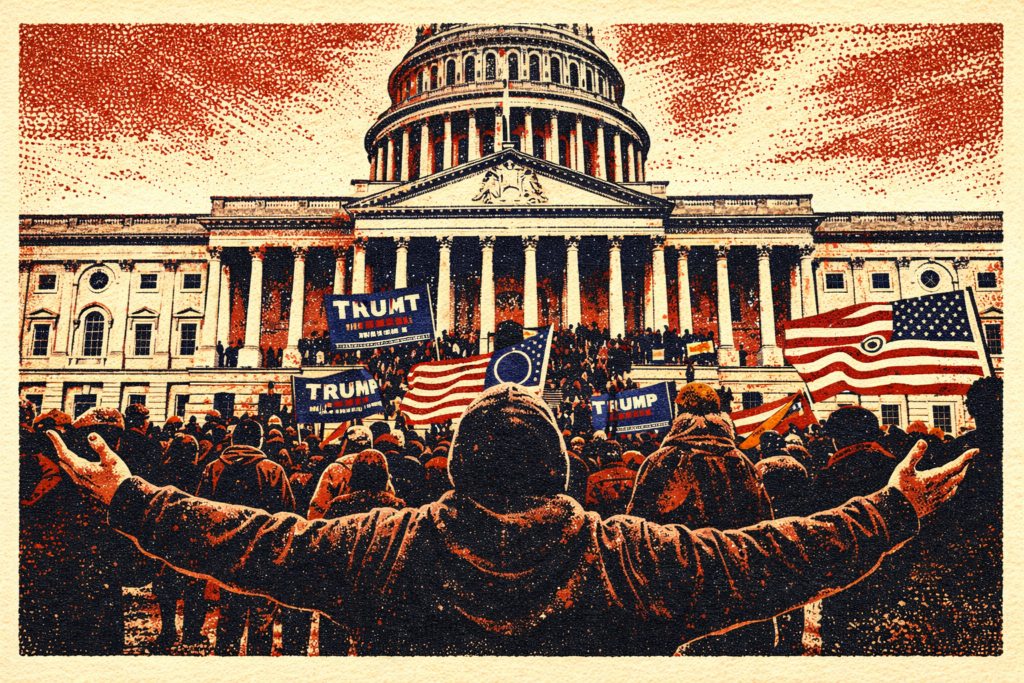
Capitol Attack Participants Sue Federal Government
Hundreds of people who participated in the January 6, 2021 attack on the U.S. Capitol have filed a class‑action lawsuit in federal court in Florida claiming they were subjected to excessive and unlawfully applied force by law enforcement during the riot — a dramatic legal twist five years after the insurrection.
The complaint, filed Friday, alleges that U.S. Capitol Police and the Metropolitan Police Department indiscriminately used chemical munitions, pepper spray, and other forceful crowd‑management tactics against a crowd that plaintiffs describe as “largely peaceful” before police began deploying force. According to the legal filing, rioters suffered chemical burns, concussions, emotional distress, and other injuries as a result of what lawyers argue was unjustified and excessive use of force.
The plaintiffs contend that police failed to provide the required warnings before deploying crowd‑control measures and that law enforcement actions were negligent and poorly supervised. The lawsuit accuses the government of assault, negligence and failure in planning and control — legal arguments that normally support civil rights and malpractice claims against government agencies.
The timing of the lawsuit is noteworthy. In early 2025, President Donald Trump issued a mass pardon of roughly 1,500 individuals charged or convicted in connection with the January 6 attack — an unprecedented move that wiped out criminal penalties for many participants and erased convictions in courts. That pardon plays a consequential role: because many rioters’ convictions were vacated or dismissed, some legal advocates now argue that those same individuals can pursue new civil claims tied to their conduct on that date.
The legal strategy behind this class action reflects broader efforts by some post‑riot defendants to leverage the political and legal shifts since 2021. Their attorneys argue that even though the events of January 6 crossed legal lines, participants were still entitled to constitutional protections against unlawful force by police. If the court accepts the class‑action status, potentially hundreds or even thousands of people could be included as plaintiffs seeking compensation.

Critics — including legal experts and commentators — quickly blasted the lawsuit as contrary to common sense and existing law. They note that the events at the Capitol involved clear criminal acts and violence including breaching barriers, assaulting officers, and attempting to disrupt a constitutionally mandated congressional proceeding. Hence, many argue that seeking civil damages for injuries sustained while committing crimes strains traditional legal concepts like duty, causation and public safety.
From law enforcement’s perspective, the actions taken on January 6 were defensive and necessary to repel a violent mob that overwhelmed police lines and sought to block the certification of election results — a fact established in countless court proceedings and official investigations. Over 140 officers were injured during the attack and the rioters caused significant damage to the Capitol building itself.
The lawsuit also arrives amid continued political and legal tensions over how January 6 should be remembered and adjudicated. Republican lawmakers have proposed bills to limit taxpayer liability for compensation related to riot‑related claims, reflecting concern that public funds could be used to pay damages to individuals who took part in the insurrection.
The Department of Justice has not publicly commented on the lawsuit yet, and many legal questions remain unresolved, including whether courts will even allow such claims to proceed given the extraordinary circumstances of the riot and the pardons. This case could eventually establish new legal precedent on how far civil claims can extend to people who break the law and then allege misconduct by government responders.
If the lawsuit survives initial motions to dismiss — likely to be filed by the government — it could move into years of litigation and potentially millions of dollars in claims for injuries and legal costs. Regardless of outcome, this development underscores the ongoing turbulence in U.S. law and politics tied to the events of January 6 and their long shadow over American institutions.

⚖️ Key Legal Outcomes
- Class‑action status filed: Hundreds (potentially thousands) of January 6 participants join one lawsuit claiming excessive force by police.
- Federal civil complaint: The lawsuit asserts constitutional and civil rights violations by U.S. Capitol Police and DC police.
- Claims for compensatory damages: Plaintiffs seek financial awards for injuries and emotional distress.
- Legal defenses likely ahead: DOJ and police agencies are expected to file motions to dismiss based on conduct during a violent attack.
- Political implications: The case intersects with Trump’s mass pardons, complicating how courts assess liability and immunities.
❗ Why It Matters
- Unprecedented legal strategy: People who participated in an insurrection are now suing the government for how police responded.
- Constitutional questions: Raises debate about the scope of First Amendment (even in unlawful protests) and limits of police authority.
- Taxpayer risk: Courts awarding damages could make taxpayers liable for payouts to individuals involved in criminal acts.
- Political flashpoint: The lawsuit adds fuel to ongoing polarization over January 6 and Trump’s pardons.
- Legal precedent: Outcome could shape future claims against government agencies in riot or protest contexts.
