
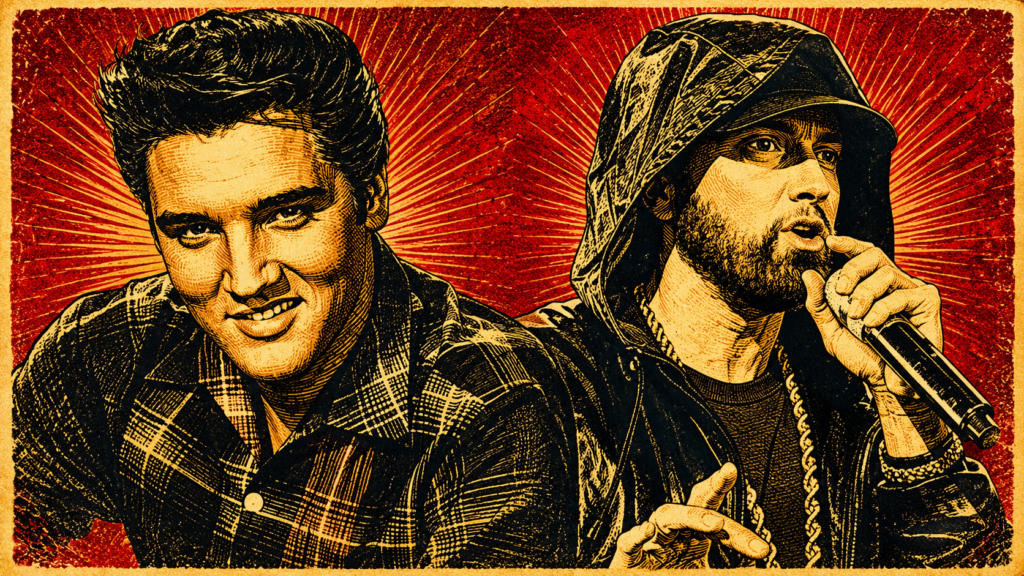
Elvis and Eminem Rights Holders Sue AI Music Company Suno
The owners of music rights associated with Elvis Presley and Eminem have filed separate federal lawsuits against Suno, an artificial intelligence music-generation company, accusing it of using copyrighted songs without permission to train its AI system. The lawsuits, filed in the U.S. District Court for the Northern District of California, raise important questions about whether AI companies can use protected music to develop commercial products without obtaining licenses from the artists, publishers or other copyright holders. The cases could become another major test of how intellectual property laws apply to generative artificial intelligence.
The Presley-related lawsuit was filed by a group of companies, trusts, publishers and other rights holders, including Elvis Presley Enterprises. The plaintiffs allege that Suno improperly used copyrighted musical compositions and exploited Presley’s distinctive voice and identity to produce AI-generated music. They argue that the company benefited commercially from creative work that took years to produce and establish as part of an internationally recognized musical legacy. The complaint seeks financial compensation and restrictions on Suno’s alleged unauthorized use of the protected material.
One particularly significant aspect of the Presley case is its reliance on Tennessee’s Ensuring Likeness, Voice and Image Security Act, commonly known as the ELVIS Act. The law was enacted to strengthen protections against unauthorized commercial uses of a person’s voice, image and likeness, including AI-generated imitations. The plaintiffs argue that Suno’s technology allows users to generate music that imitates Presley’s recognizable voice without authorization. This makes the lawsuit more than a traditional copyright dispute because it also raises questions about an individual’s identity rights in the age of artificial intelligence.
The Presley plaintiffs also accuse Suno of infringing copyrighted musical compositions by allegedly copying protected works for training purposes and retaining unauthorized copies within its systems. Their complaint identifies hundreds of musical works and seeks substantial statutory damages. They are also requesting information about the company’s training data and an accounting of how the disputed material was obtained and used. Among the remedies requested is an order addressing alleged unauthorized copies stored in the company’s systems, including material the plaintiffs claim may be retained in AI model weights.
The second lawsuit was filed by Eight Mile Style, the independent music publisher that controls rights to numerous Eminem compositions. The publisher alleges that Suno used its copyrighted music without permission to train its AI models and generate material that allegedly imitates protected musical elements. The complaint identifies 269 compositions, including well-known songs such as “Lose Yourself,” “Stan” and “The Real Slim Shady.” Eminem himself is not listed as a plaintiff in this case. Instead, the legal action is being pursued by the publisher responsible for protecting the relevant music rights.

Eight Mile Style argues that Suno’s business model depends on the unauthorized use of copyrighted recordings and compositions. According to the complaint, the company allegedly copied protected material during the development of its AI music generator and made it possible for users to create tracks that resemble the publisher’s catalog. The lawsuit also challenges the idea that changing the wording of a prompt necessarily avoids infringement. It argues that users may be able to request music resembling a particular artist’s recognizable style without directly entering the artist’s name or song titles.
Both lawsuits seek significant financial damages, although the amounts requested are allegations and demands made by the plaintiffs, not awards granted by a court. The Presley-related rights holders have identified 859 compositions and are seeking up to $128.85 million in statutory copyright damages. They also seek additional compensation connected to the alleged unauthorized use of Presley’s identity. Eight Mile Style is seeking up to approximately $40.35 million in statutory copyright damages for its identified compositions. The final amount, if any, will depend on the legal findings and applicable remedies.
Suno has previously defended its platform by saying that its purpose is to help people create original music rather than exploit the names or identities of established performers. The company has described safeguards intended to prevent users from requesting specific artists or songs and has said it uses third-party providers to screen uploaded audio files and lyrics for possible misuse. The plaintiffs, however, argue that these protections can be circumvented and do not resolve the underlying question of whether copyrighted material was improperly used to train the system. Suno has denied the new allegations, and the lawsuits will require the company to respond through the legal process.
The dispute arrives amid a wider wave of copyright litigation involving AI-generated music. Major music companies and independent publishers have challenged the use of copyrighted recordings and compositions in AI training systems. Suno has already faced legal action from major record labels, including Universal Music Group and Sony Music Entertainment, while Warner Music Group previously settled its dispute and entered into a licensing arrangement with the company. These developments illustrate the competing approaches emerging in the industry: some rights holders are pursuing litigation, while others are negotiating agreements that could allow AI companies to use music under specific commercial terms.
The lawsuits also raise a difficult legal distinction between learning from existing music and reproducing protected creative material. AI companies often argue that training systems involves analyzing large amounts of information to identify patterns and generate new content. Copyright owners counter that making unauthorized copies of their works during training can violate exclusive rights, particularly when the resulting products compete with or reproduce elements of protected material. Courts will need to examine the specific evidence, the technology involved and the relevant copyright laws rather than assume that every form of AI training is automatically lawful or unlawful.
For musicians, publishers and other creators, the outcome could influence how their work is licensed, protected and monetized as AI-generated entertainment becomes more widespread. A ruling in favor of the plaintiffs could strengthen demands for permission, compensation and greater transparency about training datasets. A decision favoring Suno could provide additional support for arguments that certain forms of AI training are legally permissible. Neither outcome is guaranteed, and the cases are still at an early stage. Ultimately, the dispute is about more than two legendary music catalogs: it concerns who controls creative work and an artist’s identity when artificial intelligence can reproduce recognizable elements of human performance.

Key Legal Outcomes
- Two federal lawsuits filed: Rights holders connected to Elvis Presley and Eminem’s music publisher have separately sued Suno in California federal court.
- Copyright infringement allegations: Both cases claim Suno used protected musical compositions without authorization to train its AI music-generation technology.
- ELVIS Act claims: The Presley-related plaintiffs are invoking Tennessee law protecting artists’ voices, images and likenesses against unauthorized commercial use.
- Millions in damages sought: The plaintiffs are demanding substantial statutory and other damages, but no court has awarded compensation in these cases.
- Potential restrictions on AI systems: The lawsuits seek remedies that could include accounting of training data and action involving alleged unauthorized copies retained by Suno.
Why It Matters
- Artists’ rights in the AI era: The cases could help establish how existing intellectual property laws protect musicians when AI systems imitate their creative work.
- Control over an artist’s identity: The Presley case tests whether laws protecting a person’s voice and likeness can address AI-generated imitations.
- Financial consequences for AI companies: A ruling against Suno could increase the cost of training AI systems and encourage licensing agreements with music publishers.
- Protection of creative industries: Musicians and publishers are seeking assurances that their work will not be used commercially without permission or compensation.
- A broader legal precedent: The outcome could influence future disputes involving AI-generated music, copyrighted recordings, lyrics and other creative content.
