
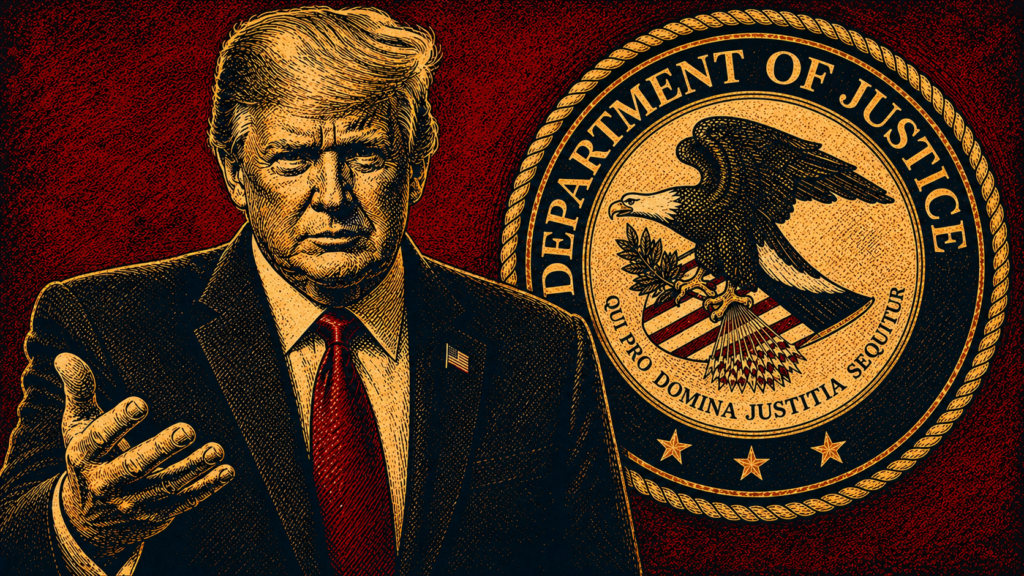
Top Officials Exit DOJ After Midterms
A wave of senior departures is hitting the U.S. Department of Justice following Republicans’ major losses in the 2026 midterm elections, with several high-ranking officials announcing their resignations within days of the vote. The departures have raised questions about the future direction of the department as Democrats prepare to take control of Congress and conduct extensive oversight of the Trump administration.
The latest departures announced Friday were John Eisenberg, head of the DOJ’s National Security Division, and Jason Reding Quiñones, the U.S. attorney for the Southern District of Florida. Their exits followed the resignation Thursday of Harmeet Dhillon, who headed the department’s Civil Rights Division.
Quiñones’ departure is especially significant because his Miami office had been overseeing the administration’s controversial “grand conspiracy” investigation into former government officials and others whom Trump and his allies accused of participating in efforts to undermine him. The investigation had focused on the hand
That investigation has struggled with personnel changes and delays. A prosecutor who had been involved in the inquiry stepped aside earlier in the year, while former federal prosecutor Joseph diGenova, who later took over the investigation, resigned in September without bringing criminal charges. Recent grand jury proceedings connected to the probe were also delayed.
Quiñones had been appointed by Trump and confirmed by the Senate in 2025. During his tenure, his office pursued the broader investigation into alleged wrongdoing by former officials and also brought an indictment against former Cuban President Raúl Castro in connection with the 1996 shooting down of civilian aircraft operated by Miami-based Cuban exiles.

Eisenberg’s resignation removes another senior official with substantial responsibility for national-security prosecutions. As assistant attorney general for the National Security Division, he oversaw matters involving terrorism, espionage, cybercrime, export controls and classified information.
Eisenberg previously served in Trump’s first administration as a White House legal adviser. During his current tenure at DOJ, his division handled several high-profile cases, including the prosecution of former national security adviser John Bolton, who pleaded guilty this year to allegations involving the retention of sensitive government material.
Dhillon’s departure the previous day was another major change. She had served as assistant attorney general for civil rights for roughly 18 months and dramatically shifted the division’s priorities toward issues favored by the Trump administration, including challenges to diversity programs, transgender policies and voting-related matters.
During Dhillon’s tenure, the Civil Rights Division also experienced a substantial loss of career personnel. Reports to Congress indicated that roughly three-quarters of the division’s staff had departed by earlier this year. Her division also filed dozens of lawsuits seeking access to state voter rolls, with the government suffering repeated courtroom defeats.
The circumstances surrounding the resignations differ. Dhillon had indicated that she intended to leave after the midterm elections, although reports said Trump had expressed frustration with her performance and had at one point wanted her removed. Her resignation letter indicated that her plans to depart had been communicated before Election Day.
By contrast, the reasons for Eisenberg’s and Quiñones’ departures have not been publicly established. Attorney General Todd Blanche praised both officials for their service, emphasizing their work on national security, violent crime, drug trafficking and other federal priorities, without discussing the circumstances behind their resignations.
The departures come at a politically consequential moment. Democrats are preparing to assume control of Congress after the midterm elections and have pledged aggressive investigations into the Trump administration and its policies. The loss of senior DOJ officials could affect the leadership and continuity of investigations while the department faces increased congressional scrutiny.
The departures also do not necessarily mean that the Trump administration’s broader Justice Department agenda is ending. Senior officials can be replaced, and the department continues to operate under the leadership of Attorney General Todd Blanche. But the rapid succession of resignations has created uncertainty around several of the administration’s most politically sensitive initiatives.

Key Legal Outcome
- DOJ National Security Division chief John Eisenberg resigned Friday.
- Southern District of Florida U.S. Attorney Jason Reding Quiñones resigned the same day.
- Their departures followed Civil Rights Division chief Harmeet Dhillon’s resignation Thursday.
- Quiñones’ exit leaves uncertainty over the future of the DOJ’s controversial “grand conspiracy” investigation into Trump’s political opponents.
- The resignations come as Democrats prepare to take control of Congress and increase oversight of the Trump administration.
Why It Matters
- The departures could disrupt several of the Trump administration’s most politically sensitive federal investigations.
- The “grand conspiracy” investigation had already suffered personnel losses, delays and an absence of criminal charges.
- Eisenberg’s departure creates a leadership change in the DOJ division responsible for terrorism, espionage and other national-security matters.
- The timing raises questions about whether the midterm election results are accelerating turnover within the Trump administration.
- Democrats’ coming congressional control could place the DOJ under significantly greater scrutiny through investigations and oversight hearings.
