
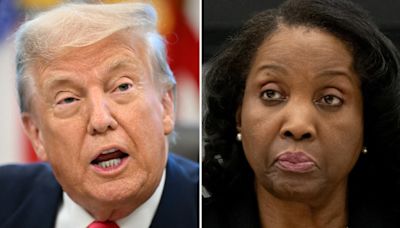
Trump Demands Resignation of Fed Governor Lisa Cook Amid Mortgage Fraud Allegations
President Donald Trump escalated his campaign to influence the Federal Reserve by demanding the resignation of Governor Lisa Cook, following mortgage fraud allegations raised by Bill Pulte, Director of the Federal Housing Finance Agency. Pulte accused Cook of fraudulently designating two properties—one in Michigan, another in Georgia—as primary residences to secure favorable mortgage terms in 2021. Trump amplified the claims through social media, calling for immediate action.
Cook quickly responded with firm defiance, stating she had “no intention of being bullied to step down” and would provide accurate information if legitimate concerns were raised. Her refusal highlighted the broader context: efforts by Trump-aligned figures to reshape the Fed by targeting its independent members.

The situation marks a continuation of Trump’s tense relationship with central bank leadership. With Governor Adriana Kugler’s recent resignation, Trump swiftly appointed advisor Stephen Miran to fill her seat—moves that collectively suggest a strategic push to influence monetary policy by stacking the board with allies.
Governor Cook’s appointment in 2022 was historic—she is the first Black woman to serve on the Federal Reserve Board, confirmed by the Senate via a tie-breaking vote by Vice President Kamala Harris. Critics argue Trump’s pressure campaign undermines the Fed’s independence, which is vital for maintaining economic stability.
Legal experts caution that forcing Cook’s resignation or firing would likely face strong legal challenges. Federal law allows Fed governors to be removed only “for cause,” typically requiring demonstrable misconduct—not policy disagreements or unverified allegations. Any forced removal effort could spark a constitutional showdown over executive overreach and institutional autonomy.

Key Legal Outcomes
-
Political pressure on independent agency: The resignation demand undermines the longstanding principle of Federal Reserve independence.
-
Historical implications: Targeting Cook, the first Black woman on the board, raises concerns about politicizing appointments tied to representation.
-
Precedential threat: Successful removal could set a dangerous precedent, weakening protections for future appointees.
-
Legal vulnerability: Without legally sufficient cause, efforts to remove Cook could be blocked by courts.
-
Strategic board shift: If successful, Trump could influence rate-setting decisions by achieving board majority with sympathetic appointees.
Why It Matters
-
Central bank integrity at risk: Politicization of board composition jeopardizes policy stability and economic credibility.
-
Elections and rates intertwined: Influence over the Fed could become a potent political tool, blurring boundaries between policy and politics.
-
Systemic balance threatened: Undermining Fed autonomy could cascade into broader attacks on institutional checks and balances.
-
Representation impacts: Cook’s forced exit would diminish diversity at a key economic institution.
-
Judicial precedent in peril: A successful removal under political pretext would erode the legal standards shielding independent governance.
Outlet: Washington Post & AP News, also reported by Reuters
Publication Date: August 20, 2025
